
Quick answer: Pencil-point spinal needles are a Anesthesia / Spinal Needles item intended for subarachnoid block, supplied as 25G / 26G / 27G x 90 / 103 / 120 mm. In anaesthesiology departments the relevant buyers are hospital procurement teams, and the common purchasing question is sterile single-pack presentation.
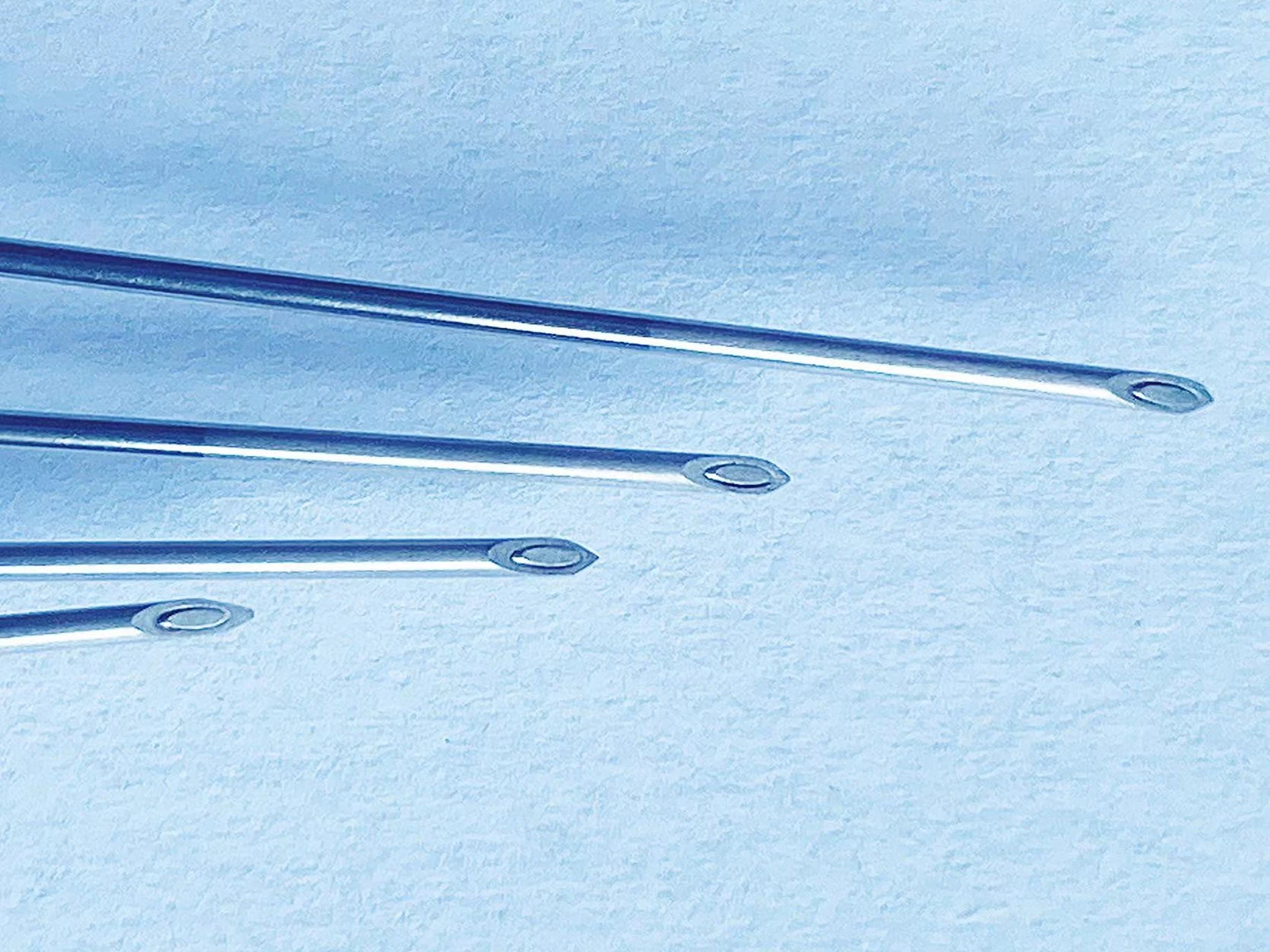
Customising Pencil-Point Spinal Needles for Anaesthesiology Departments
For kit assembly, the critical inputs are the component specification 25G / 26G / 27G x 90 / 103 / 120 mm and the agreed pack configuration. Any change to a version-locked configuration should require written customer confirmation before implementation. Because the stated configuration is 25G / 26G / 27G x 90 / 103 / 120 mm, a tender that omits it invites inconsistent quotations. Non-conforming lots should be quarantined and recorded against the same specification used for ordering.
- OEM configuration checkpoints:
- Fix the component specification: 25G / 26G / 27G x 90 / 103 / 120 mm.
- Agree the pack format and component order.
- Record any matched-component relationship in writing.
- Require written confirmation before changing a locked version.
Whether CE marking under MDR, FDA 510(k) clearance or another route applies depends on the destination market and must be confirmed against the supplier’s current file. Ask bidders to state any deviation from 25G / 26G / 27G x 90 / 103 / 120 mm explicitly rather than burying it in an equivalent-brand clause. For anaesthesiology departments, the practical question is whether the configuration fits the existing routine without extra handling. Counting by configuration rather than by carton prevents silent drift in what is actually on the shelf.
Leaving the pack format undefined invites quotations that cannot be compared. Most disagreements between a buyer and a supplier turn out to be differences in configuration wording. Anaesthesia department heads commonly ask for a sample build approval step ahead of the first production run. The buyers named in the data include hospital procurement teams, who typically work from a written specification.
Technical Schedule for Pencil-Point Spinal Needles
Configuration details such as 25G / 26G / 27G x 90 / 103 / 120 mm belong in the technical schedule, not in a separate email. The specification 25G / 26G / 27G x 90 / 103 / 120 mm is descriptive, not a performance claim, and should be read that way. The GaoGuan Medical listing treats pencil-point spinal needles as a consumable line with a fixed specification of 25G / 26G / 27G x 90 / 103 / 120 mm. In practical terms the primary use is subarachnoid (spinal) block with a lower risk of post-dural-puncture headache, and is suited to obstetric and younger patients, and that purpose drives where the product is deployed.
| Parameter | Stated specification | Notes / configuration |
|---|---|---|
| 25G | 90 / 103 / 120 mm | Pencil-point (Whitacre) |
| 26G | 90 / 103 / 120 mm | Pencil-point (Whitacre) |
| 27G | 90 / 103 / 120 mm | Pencil-point (Whitacre) |
Evaluation criteria should be visible to all bidders so that equivalent offers can be compared fairly. This is a descriptive comparison of catalogue configurations, not a clinical performance claim. Pack integrity is the first visual check; configuration against the purchase order is the second. Whether CE marking under MDR, FDA 510(k) clearance or another route applies depends on the destination market and must be confirmed against the supplier’s current file.
Treating pencil-point spinal needles and Tuohy epidural needles as interchangeable ignores the different stated uses recorded in the product data. Review these points with hospital procurement teams before the specification is issued, not after quotations arrive. Where anaesthesiology departments runs several departments, separate stock points should still share one configuration list. Because the stated configuration is 25G / 26G / 27G x 90 / 103 / 120 mm, a tender that omits it invites inconsistent quotations.
Primary Uses of Pencil-Point Spinal Needles
Because the stated use is subarachnoid (spinal) block with a lower risk of post-dural-puncture headache, and is suited to obstetric and younger patients, the configuration is discussed in relation to that procedure. The source listing gives the main use as subarachnoid (spinal) block with a lower risk of post-dural-puncture headache, and is suited to obstetric and younger patients, without extending the claim to other indications. Buyers will find pencil-point spinal needles under Anesthesia / Spinal Needles, where the range is described as 25G / 26G / 27G x 90 / 103 / 120 mm. Teams in orthopaedic operating rooms usually map pencil-point spinal needles against sterile field set-up before fixing a standing order.
- Stated use: Subarachnoid (spinal) block with a lower risk of post-dural-puncture headache; suited to obstetric and younger patients.
- Pencil-point tip separates rather than cuts dural fibres.
- Commonly shortlisted where headache risk drives needle policy.
- Supplied loose for OEM kit assembly or as part of a sterile pack.
Typical deployment is described around anaesthesiology departments, with orthopaedic operating rooms named as a target setting. Specifying teams should anchor the requirement to the stated purpose, subarachnoid (spinal) block with a lower risk of post-dural-puncture headache, and is suited to obstetric and younger patients. Most disagreements between a buyer and a supplier turn out to be differences in configuration wording. Training and correct handling are the practical levers available to orthopaedic operating rooms when introducing a new consumable.
At goods receipt, check label wording, lot identification, pack integrity and the stated configuration 25G / 26G / 27G x 90 / 103 / 120 mm. This is a descriptive comparison of catalogue configurations, not a clinical performance claim. Evaluation criteria should be visible to all bidders so that equivalent offers can be compared fairly. The use case recorded in the product data is subarachnoid (spinal) block with a lower risk of post-dural-puncture headache, and is suited to obstetric and younger patients, and specifications are written around it.
Registration Files and Pencil-Point Spinal Needles in Anaesthesiology Departments
Where a kit is version-locked, the registration dossier and the packed configuration must stay aligned. Importers typically verify that the supplied item matches the product description held in the local registration dossier. Anaesthesia department heads usually require that any configuration change be confirmed in writing before the next shipment. Ask bidders to state any deviation from 25G / 26G / 27G x 90 / 103 / 120 mm explicitly rather than burying it in an equivalent-brand clause.
- Documentation commonly requested in a tender dossier:
- Current product data sheet naming 25G / 26G / 27G x 90 / 103 / 120 mm.
- Quality-system certificate valid for the supplied item.
- Declaration of conformity or market-specific clearance, where applicable.
- Lot identification and traceability records.
- Sterilisation and packaging information for the stated presentation.
Pencil-point spinal needles carry the specification 25G / 26G / 27G x 90 / 103 / 120 mm, which is the baseline for acceptance checking. The same discipline applies across the range, from pencil-point spinal needles to Tuohy epidural needles. The stated use, subarachnoid (spinal) block with a lower risk of post-dural-puncture headache, and is suited to obstetric and younger patients, should be quoted unchanged in any derived specification or pack insert. Storage conditions should follow the labelled requirements and the supplier’s written handling instructions.
Skipping a written confirmation step on configuration changes undermines version control over time. Where the data is silent, the sensible approach is a qualitative requirement plus a document request. Commonly requested documentation includes a quality-system certificate, a declaration of conformity where applicable, and lot records. The route to market recorded for this line runs through Hospital tender and group purchasing.
Verifying Pencil-Point Spinal Needles on Delivery
At goods receipt, check label wording, lot identification, pack integrity and the stated configuration 25G / 26G / 27G x 90 / 103 / 120 mm. A sample retention and lot-traceability routine makes later investigations considerably shorter. The specification 25G / 26G / 27G x 90 / 103 / 120 mm is descriptive, not a performance claim, and should be read that way. Where a kit is version-locked, the registration dossier and the packed configuration must stay aligned.
- Goods-in checks for pencil-point spinal needles:
- Label wording matches the purchase order.
- Configuration reads 25G / 26G / 27G x 90 / 103 / 120 mm.
- Pack integrity is intact and lot identification is legible.
- Documentation set matches the agreed dossier.
- Deviations are quarantined and recorded.
Inventory planning for pencil-point spinal needles normally follows a size matrix, so slow-moving variants should be identified early. Record decisions in writing so that the next procurement cycle starts from a stable baseline. Treating pencil-point spinal needles and Tuohy epidural needles as interchangeable ignores the different stated uses recorded in the product data. Volume planning should be expressed per department and per month, not as a single annual lump figure.
Training and correct handling are the practical levers available to orthopaedic operating rooms when introducing a new consumable. The same discipline applies across the range, from pencil-point spinal needles to Tuohy epidural needles. Pack integrity is the first visual check; configuration against the purchase order is the second. Purchasing responsibility generally sits with hospital procurement teams, supported by Hospital tender and group purchasing.
Replenishment Planning for Pencil-Point Spinal Needles
Where anaesthesiology departments runs several departments, separate stock points should still share one configuration list. Version-locked configurations make stock reconciliation simpler because the item identity does not move. When hospital procurement teams compare offers, 25G / 26G / 27G x 90 / 103 / 120 mm is the field that most often gets shortened or lost. In day-to-day work the sequence runs through sterile field set-up, so the consumable has to fit that step without rework.
Quality documentation is normally requested as a dossier covering the item, the configuration and the lot. Requests for samples should use the exact configuration intended for the contract. Where the data is silent, the sensible approach is a qualitative requirement plus a document request. A brief refresher after the first month usually surfaces practical issues that a tender cannot predict.
Standardising one configuration across departments often reduces administrative cost more than price negotiation does. Record decisions in writing so that the next procurement cycle starts from a stable baseline. Inventory planning for pencil-point spinal needles normally follows a size matrix, so slow-moving variants should be identified early. Distribution is described through Hospital tender and group purchasing, which is where hospital procurement teams usually place volume orders.
Supply Channels for Pencil-Point Spinal Needles
Distribution is described through Hospital tender and group purchasing, which is where hospital procurement teams usually place volume orders. Anaesthesia department heads tend to evaluate pencil-point spinal needles against a fixed configuration before discussing volume. Pencil-point spinal needles are listed for use in orthopaedic operating rooms, which shapes both the specification and the pack configuration. The application setting, anaesthesiology departments, belongs in the specification because it determines pack format and replenishment pattern.
- Channels listed for this line:
- Hospital tender and group purchasing
- Anaesthesia kit OEM assembly
- Regional consumable distributors
- Import registration and hospital group agreement supply, where applicable.
Component traceability matters more in OEM supply because the finished pack carries another party’s label. Importers typically verify that the supplied item matches the product description held in the local registration dossier. The same discipline applies across the range, from pencil-point spinal needles to Tuohy epidural needles. Version-locked configurations make stock reconciliation simpler because the item identity does not move.
Freight, storage conditions and lot rotation are usually handled as separate lines in anaesthesiology departments budgets. Keep the discussion anchored to what the specification actually says and to how orthopaedic operating rooms work. Tender documents for pencil-point spinal needles are usually prepared by hospital procurement teams and fulfilled through Hospital tender and group purchasing. Non-conforming lots should be quarantined and recorded against the same specification used for ordering.
Pre-Order Checklist for Pencil-Point Spinal Needles
Requests for samples should use the exact configuration intended for the contract. The published specification is 25G / 26G / 27G x 90 / 103 / 120 mm, and any equivalent offer should be compared against it line by line. A sample retention and lot-traceability routine makes later investigations considerably shorter. Standards such as ISO 13485, ISO 11135 for ethylene oxide sterilisation and ISO 10993 for biocompatibility are often referenced in tender dossiers.
- Pre-order checklist for anaesthesiology departments:
- consistent gauge availability
- sterile single-pack presentation
- shortened pre-operative preparation
- traceable lot documentation
- Configuration stated as 25G / 26G / 27G x 90 / 103 / 120 mm.
- Documentation set and acceptance criteria agreed in writing.
Counting by configuration rather than by carton prevents silent drift in what is actually on the shelf. For anaesthesiology departments, the practical question is whether the configuration fits the existing routine without extra handling. Assuming certification status from a previous tender instead of requesting the current document is a recurring problem. Supervisors should record which configuration each team was trained on and when.
The buyers named in the data include hospital procurement teams, who typically work from a written specification. A short, precise specification is cheaper to administer than a long one full of unverifiable claims. Pack format, documentation work and change-control effort all sit inside the total cost, not just the unit price. Any complication-rate discussion belongs in the clinical literature, not in a supplier catalogue.
Frequently asked questions
Can pencil-point spinal needles be supplied for kit assembly or private label?
In practical terms the primary use is subarachnoid (spinal) block with a lower risk of post-dural-puncture headache, and is suited to obstetric and younger patients, and that purpose drives where the product is deployed. Repeat the same wording, 25G / 26G / 27G x 90 / 103 / 120 mm, across the purchase order, the pack label and the registration file. The wording below follows the source product listing, which records settings, channels and stated uses rather than outcomes.
Why does the registration file need to match 25G / 26G / 27G x 90 / 103 / 120 mm?
Application planning for pencil-point spinal needles starts with the setting: orthopaedic operating rooms and similar units. Pencil-point spinal needles reach anaesthesiology departments through Hospital tender and group purchasing, rather than only through direct hospital purchasing. Anaesthesia department heads usually require that any configuration change be confirmed in writing before the next shipment.
How should hospital procurement teams handle a proposed configuration change?
Standards such as ISO 13485, ISO 11135 for ethylene oxide sterilisation and ISO 10993 for biocompatibility are often referenced in tender dossiers. Anaesthesia department heads usually award on a combination of specification fit, supply continuity and document completeness. Record decisions in writing so that the next procurement cycle starts from a stable baseline.
How should a size matrix for pencil-point spinal needles be planned?
Single-patient use and aseptic handling are the two safety topics most often written into anaesthesiology departments specifications. The stated use, subarachnoid (spinal) block with a lower risk of post-dural-puncture headache, and is suited to obstetric and younger patients, has to be achievable inside the existing sterile field set-up routine. Supervisors should record which configuration each team was trained on and when.
Continue reading
- When Pencil-Point Spinal Needles Do Not Fit Hospital Operating Rooms Workflows
- Why Hospital Operating Rooms Choose Quincke Spinal Needles
- What Hospital Operating Rooms Should Know About CSE Combined Kits Safety
- Nerve Block Kits Supply Planning for Hospital Operating Rooms





 English
 Deutsch
 Français
 Русский
 Español
 Português