Nursing consumables are the highest-volume, lowest-unit-price items on a hospital's list, and precisely for that reason they are where infection-control failures are most visible. A reusable tourniquet passed between patients is one of the most commonly cited cross-contamination routes in phlebotomy audits; a cord clamp that does not lock is a neonatal safety incident. The category looks trivial on a purchase order and is anything but trivial on a ward.
This category covers the basic nursing and maternity consumables: single-use disposable tourniquets for venepuncture and IV access, and umbilical cord scissors with integrated clamp for delivery rooms. Both are supplied individually packed, sterilized where the intended use requires it, and documented to the batch level so a hospital's infection-control committee and a distributor's registration file are both satisfied.
Buyers in this category care about three things: does it work every single time without a training step, is the packaging right for the ward's dispensing routine, and does the order arrive with the lot documentation intact.
Replacing reusable tourniquets to close an infection-control finding? Tell us the wards and the annual volume. We will quote single-use stock with the dispensing format that fits your routine — individual, strip or bulk — and supply the documentation your committee asks for.


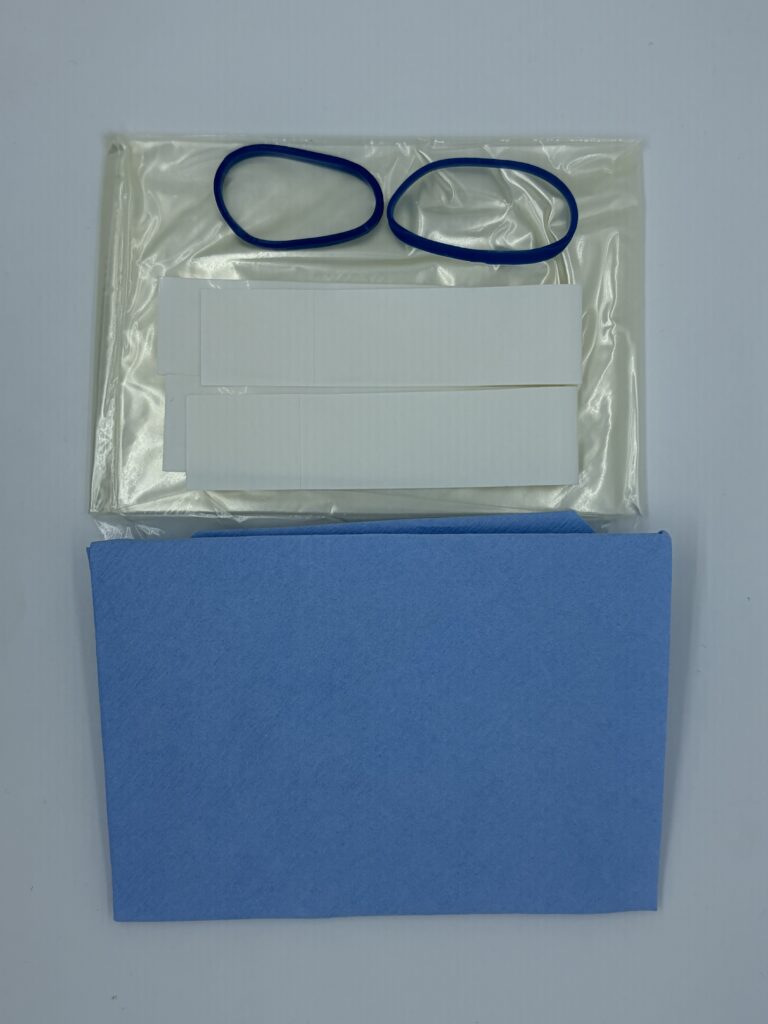
Three practical decisions:
| Item | Typical specification | Packaging | Primary use |
|---|---|---|---|
| Disposable tourniquet | Latex-free elastic band, 25 × 450 mm class | Individual or strip | Venepuncture, IV access |
| Paediatric tourniquet | Narrower band, softer tension | Individual | Paediatric and neonatal access |
| Umbilical cord scissors | Blunt-ended, matched blade length | Sterile, single | Delivery room cord cutting |
| Umbilical cord clamp | Single-action locking clamp | Sterile, single | Cord occlusion after delivery |
| Scissors-and-clamp set | Matched pair in one pack | Sterile procedure pack | Delivery room, one-step handling |
Note: specifications shown are the configurations we build most often; band size, packing format and sterilization state are confirmed per order.
What nursing and maternity buyers verify:
Yes — the tourniquets we supply are latex-free by construction, which is now the default expectation for phlebotomy and IV access. Where a component in any other item contains latex, it is declared on the label and in the specification, because an undeclared latex contact in a nursing consumable is a patient-safety issue rather than a purchasing detail.
Individually wrapped tourniquets are dispensed one per patient, which suits blood-collection drives and outpatient clinics where the unit is handed to the patient and disposed of after use. Strip or bulk packing suits ward drawers and theatre start-up where staff withdraw stock in volume. The device is the same; the dispensing format follows your infection-control routine.
Yes. Cord clamps and cord scissors are supplied as sterile, single-use devices in individual pouches with lot number and expiry, since they are used on an open cord stump in the delivery room. We also supply a matched scissors-and-clamp set in one sterile pack for units that prefer a single-handling sequence.
A wider, softer band generally achieves venous distension with less patient discomfort and less risk of pinching, and is the usual choice for routine venepuncture in adult wards. Narrower, firmer bands give a more pronounced occlusion and are used where access is difficult, and for paediatric and neonatal patients a smaller format is standard. Tell us your patient mix and we will propose a size combination.
Yes. Tourniquets and cord consumables are supplied with your artwork, part numbers and IFU, including the label content your market requires. Because these are high-volume items, private label is usually quoted on the annual volume and the packaging format rather than per small order.
Every shipment carries the lot number and expiry, and the manufacturer-side document pack — ISO 13485 certificate, CE marking where applicable, declaration of conformity, biocompatibility and sterilization reports where relevant — is available for your registration file. Specimen quality certificates can be issued before a first order.
Related categories:
Disposable Tourniquet ·
Disposable Umbilical Cord Scissors & Clip ·
Anesthesia Consumables
OEM & manufacturing:
OEM Infusion & Nursing Consumables ·
Low MOQ OEM ·
OEM & ODM Services
Regulatory guides for your market:
EU MDR Import Requirements ·
Kenya PPB Registration ·
Philippines FDA Registration
Who we supply:
Hospital Procurement ·
Homecare & Rehabilitation ·
Become a Distributor
Technical reading:
Urinary Catheterization Kits Guide ·
Sterile Syringes and Needles: Clinical Uses ·
ISO 11607 Packaging Validation
Need a reliable Nursing Consumables supply with the right paperwork?
Tell us the item, the wards you supply and the annual volume. We will quote in your preferred dispensing format and attach the documentation your infection-control and registration processes need.
Volume quotes are returned with the specification and the packing format options.
 English English
 Deutsch
 Français
 Русский
 Español
 Português