
Réponse rapide : 23G blunt cannulas are a Aesthetic / Cannulas item intended for general-purpose filler injection, supplied as 23G. In plastic surgery hospitals the relevant buyers are aesthetic chain purchasing teams, and the common purchasing question is OEM matching with filler products.

What Plastic Surgery Hospitals Should Consider About 23G Blunt Cannulas Safety
Any complication-rate discussion belongs in the clinical literature, not in a supplier catalogue. Where the source data notes described as the general-purpose specification in the source data, that statement should be quoted as written rather than expanded. Because the stated use is general-purpose filler gauge for nasolabial fold and marionette line work, the configuration is discussed in relation to that procedure. Introduce 23G blunt cannulas with a short handling session focused on gauge and shaft selection rather than on catalogue detail.
Aesthetic chain purchasing teams usually require that any configuration change be confirmed in writing before the next shipment. A change to 23G or to the pack contents normally triggers a regulatory review on the buyer’s side. This is a descriptive comparison of catalogue configurations, not a clinical performance claim. In day-to-day work the sequence runs through gauge and shaft selection, so the consumable has to fit that step without rework.
Leaving the pack format undefined invites quotations that cannot be compared. The same discipline applies across the range, from 23G blunt cannulas to 21G blunt cannulas. Safety discussions should stay with design intent and handling, and avoid unsupported performance claims. Long-term agreements work better when the configuration is version-locked and changes require written confirmation.
Where 23G Blunt Cannulas Sit in the Product Range
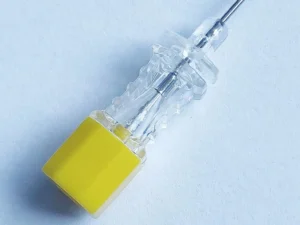
23G blunt cannulas are listed in the GaoGuan Medical range under Aesthetic / Cannulas, with a stated specification of 23G. The specification 23G is descriptive, not a performance claim, and should be read that way. The use case recorded in the product data is general-purpose filler gauge for nasolabial fold and marionette line work, and specifications are written around it. 23G blunt cannulas are listed for use in aesthetic outpatient centres, which shapes both the specification and the pack configuration.
For aesthetic outpatient centres, the relevant use case remains general-purpose filler gauge for nasolabial fold and marionette line work rather than a broader therapeutic claim. Keep the discussion anchored to what the specification actually says and to how aesthetic outpatient centres work. 23G blunt cannulas reach plastic surgery hospitals through Chain group purchasing, rather than only through direct hospital purchasing. Aesthetic chain purchasing teams usually require that any configuration change be confirmed in writing before the next shipment.
Gauge, length and configuration appear in the listing as 23G, so substitutions should be flagged explicitly. Record decisions in writing so that the next procurement cycle starts from a stable baseline. Where the source data notes described as the general-purpose specification in the source data, that statement should be quoted as written rather than expanded. As a catalogue item, Disposable Blunt Cannula 23G is defined by 23G and by its stated use in general-purpose filler injection.
Single-Use 23G Blunt Cannulas in Plastic Surgery Hospitals
Purchasing teams should ask how the chosen configuration supports the department’s existing safety protocol. Non-conforming lots should be quarantined and recorded against the same specification used for ordering. Specifying teams should anchor the requirement to the stated purpose, general-purpose filler gauge for nasolabial fold and marionette line work. Teams in aesthetic outpatient centres usually map 23G blunt cannulas against gauge and shaft selection before fixing a standing order.
- Single-use and aseptic points for plastic surgery hospitals:
- Vérifier la présentation jetable indiquée sur l'étiquette.
- Vérifier l'intégrité de l'emballage avant ouverture.
- Consignez le lot conformément à la procédure de documentation du département.
- Éliminer le produit conformément au protocole local de gestion des déchets cliniques.
Commonly requested documentation includes a quality-system certificate, a declaration of conformity where applicable, and lot records. A short, precise specification is cheaper to administer than a long one full of unverifiable claims. A brief refresher after the first month usually surfaces practical issues that a tender cannot predict. A par level set by aesthetic outpatient centres reduces the risk of substituting a different gauge mid-case.
A workable tender separates the clinical requirement, the configuration 23G, the pack format and the documentation set. Keep the discussion anchored to what the specification actually says and to how aesthetic outpatient centres work. Training and correct handling are the practical levers available to aesthetic outpatient centres when introducing a new consumable. Application planning for 23G blunt cannulas starts with the setting: aesthetic outpatient centres and similar units.
What 23G Blunt Cannulas Are Actually for
The use case recorded in the product data is general-purpose filler gauge for nasolabial fold and marionette line work, and specifications are written around it. In practical terms the primary use is general-purpose filler gauge for nasolabial fold and marionette line work, and that purpose drives where the product is deployed. 23G blunt cannulas are a defined line item in the GaoGuan Medical listing, specified as 23G. A workflow built around gauge and shaft selection leaves little room for opening multiple separately packed items.
- Stated use: General-purpose filler gauge for nasolabial fold and marionette line work.
- Described as the general-purpose specification in the source data.
- Commonly the first gauge listed in a clinic standing order.
23G blunt cannulas are listed for use in aesthetic outpatient centres, which shapes both the specification and the pack configuration. 23G blunt cannulas are intended for general-purpose filler injection; beyond that stated use, no additional indication is claimed. Record decisions in writing so that the next procurement cycle starts from a stable baseline. Aesthetic chain purchasing teams should record deviations and handling observations through the department’s usual reporting route.
Aesthetic chain purchasing teams usually require that any configuration change be confirmed in writing before the next shipment. A short, precise specification is cheaper to administer than a long one full of unverifiable claims. Requests for samples should use the exact configuration intended for the contract. Specifying teams should anchor the requirement to the stated purpose, general-purpose filler gauge for nasolabial fold and marionette line work.
Introducing 23G Blunt Cannulas to Aesthetic Chain Clinics
When a new gauge or length is added, refresh the training note rather than relying on the old version. A brief refresher after the first month usually surfaces practical issues that a tender cannot predict. The stated use, general-purpose filler gauge for nasolabial fold and marionette line work, has to be achievable inside the existing gauge and shaft selection routine. The product listing describes design features such as described as the general-purpose specification in the source data, but makes no comparative clinical claim.
- Sujets abordés lors d'une courte session de compétences :
- procedure mapping by anatomical area
- gauge and shaft selection
- entry point preparation
- post-procedure review
- Recognition of the configuration 23G.
A sample retention and lot-traceability routine makes later investigations considerably shorter. The wording below follows the source product listing, which records settings, channels and stated uses rather than outcomes. The use case recorded in the product data is general-purpose filler gauge for nasolabial fold and marionette line work, and specifications are written around it. Failing to align the purchase order with the registration file creates avoidable work at import.
A par level set by aesthetic outpatient centres reduces the risk of substituting a different gauge mid-case. For plastic surgery hospitals, the practical question is whether the configuration fits the existing routine without extra handling. Handling guidance should be consistent with the labelled instructions and the department’s own protocol. The application setting, plastic surgery hospitals, belongs in the specification because it determines pack format and replenishment pattern.
Quality Checks for 23G Blunt Cannulas in Plastic Surgery Hospitals
Aesthetic chain purchasing teams usually require that any configuration change be confirmed in writing before the next shipment. Quality documentation is normally requested as a dossier covering the item, the configuration and the lot. When aesthetic chain purchasing teams compare offers, 23G is the field that most often gets shortened or lost. No certification status should be assumed from a catalogue; ask for the current, valid document instead.
- Goods-in checks for 23G blunt cannulas:
- Le libellé de l'étiquette correspond à celui du bon de commande.
- Configuration reads 23G.
- L'intégrité de l'emballage est intacte et l'identification du lot est lisible.
- Le dossier documentaire correspond au dossier convenu.
- Les écarts sont mis en quarantaine et consignés.
Version-locked configurations make stock reconciliation simpler because the item identity does not move. Most disagreements between a buyer and a supplier turn out to be differences in configuration wording. The most common specification error is quoting the product family without the configuration 23G. Long-term agreements work better when the configuration is version-locked and changes require written confirmation.
Aesthetic chain purchasing teams should record deviations and handling observations through the department’s usual reporting route. The wording below follows the source product listing, which records settings, channels and stated uses rather than outcomes. A sample retention and lot-traceability routine makes later investigations considerably shorter. Distribution is described through Chain group purchasing, which is where aesthetic chain purchasing teams usually place volume orders.
Documentation to Request for 23G Blunt Cannulas
Standards such as ISO 13485, ISO 11135 for ethylene oxide sterilisation and ISO 10993 for biocompatibility are often referenced in tender dossiers. Where a kit is version-locked, the registration dossier and the packed configuration must stay aligned. Pack integrity is the first visual check; configuration against the purchase order is the second. The application setting, plastic surgery hospitals, belongs in the specification because it determines pack format and replenishment pattern.
- Documents généralement demandés dans un dossier d'appel d'offres :
- Current product data sheet naming 23G.
- Certificat de système qualité valable pour l'article fourni.
- Déclaration de conformité ou autorisation spécifique au marché, le cas échéant.
- Enregistrements d'identification et de traçabilité des lots.
- Informations relatives à la stérilisation et au conditionnement pour la présentation indiquée.
Gauge, length and configuration appear in the listing as 23G, so substitutions should be flagged explicitly. Review these points with aesthetic chain purchasing teams before the specification is issued, not after quotations arrive. Any change to a version-locked configuration should require written customer confirmation before implementation. Version-locked configurations make stock reconciliation simpler because the item identity does not move.
Failing to align the purchase order with the registration file creates avoidable work at import. Most disagreements between a buyer and a supplier turn out to be differences in configuration wording. A change to 23G or to the pack contents normally triggers a regulatory review on the buyer’s side. For plastic surgery hospitals, the relevant channel is Chain group purchasing, with aesthetic chain purchasing teams drafting the requirement.
Further Considerations for 23G Blunt Cannulas in Plastic Surgery Hospitals
Keep the discussion anchored to what the specification actually says and to how aesthetic outpatient centres work. Specifying teams should anchor the requirement to the stated purpose, general-purpose filler gauge for nasolabial fold and marionette line work. Configuration details such as 23G belong in the technical schedule, not in a separate email. Distribution is described through Chain group purchasing, which is where aesthetic chain purchasing teams usually place volume orders.
At goods receipt, check label wording, lot identification, pack integrity and the stated configuration 23G. This is a descriptive comparison of catalogue configurations, not a clinical performance claim. Standards such as ISO 13485, ISO 11135 for ethylene oxide sterilisation and ISO 10993 for biocompatibility are often referenced in tender dossiers. Reorder points should account for lead time and for any documentation checks on arrival.
Single-patient use and aseptic handling are the two safety topics most often written into plastic surgery hospitals specifications. Review these points with aesthetic chain purchasing teams before the specification is issued, not after quotations arrive. Aesthetic chain purchasing teams usually award on a combination of specification fit, supply continuity and document completeness. Standardising gauge and shaft selection is often easier than renegotiating the specification later.
Foire aux questions
Can 23G blunt cannulas be supplied for kit assembly or private label?
In practical terms the primary use is general-purpose filler gauge for nasolabial fold and marionette line work, and that purpose drives where the product is deployed. Repeat the same wording, 23G, across the purchase order, the pack label and the registration file. Review these points with aesthetic chain purchasing teams before the specification is issued, not after quotations arrive.
Why does the registration file need to match 23G?
Application planning for 23G blunt cannulas starts with the setting: aesthetic outpatient centres and similar units. 23G blunt cannulas reach plastic surgery hospitals through Chain group purchasing, rather than only through direct hospital purchasing. Aesthetic chain purchasing teams usually require that any configuration change be confirmed in writing before the next shipment.
How should aesthetic chain purchasing teams handle a proposed configuration change?
Standards such as ISO 13485, ISO 11135 for ethylene oxide sterilisation and ISO 10993 for biocompatibility are often referenced in tender dossiers. Aesthetic chain purchasing teams usually award on a combination of specification fit, supply continuity and document completeness. A short, precise specification is cheaper to administer than a long one full of unverifiable claims.
How should a size matrix for 23G blunt cannulas be planned?
Single-patient use and aseptic handling are the two safety topics most often written into plastic surgery hospitals specifications. The stated use, general-purpose filler gauge for nasolabial fold and marionette line work, has to be achievable inside the existing gauge and shaft selection routine. Supervisors should record which configuration each team was trained on and when.
Poursuivez votre lecture
- Registration Files and Adult Disposable Tourniquets: A Guide for Infusion Suites
- Paediatric Tourniquets Aseptic Handling in Infusion Suites
- Comment les programmes d'injection de produits de comblement achètent des canules à bout arrondi 23G : un guide pratique
- Canules 23G-L de longueur étendue et sécurité des patients dans les programmes d'injection de produits de comblement : un guide





 English
 Deutsch
 Français
 Русский
 Español
 Português