
Quick answer: Pencil-point spinal needles serve subarachnoid block and are specified as 25G / 26G / 27G x 90 / 103 / 120 mm. They are listed for intensive care units and reach diagnostic lumbar puncture services through Regional consumable distributors. This article sets out the application settings, the stated uses and the checks that belong in a purchase specification.
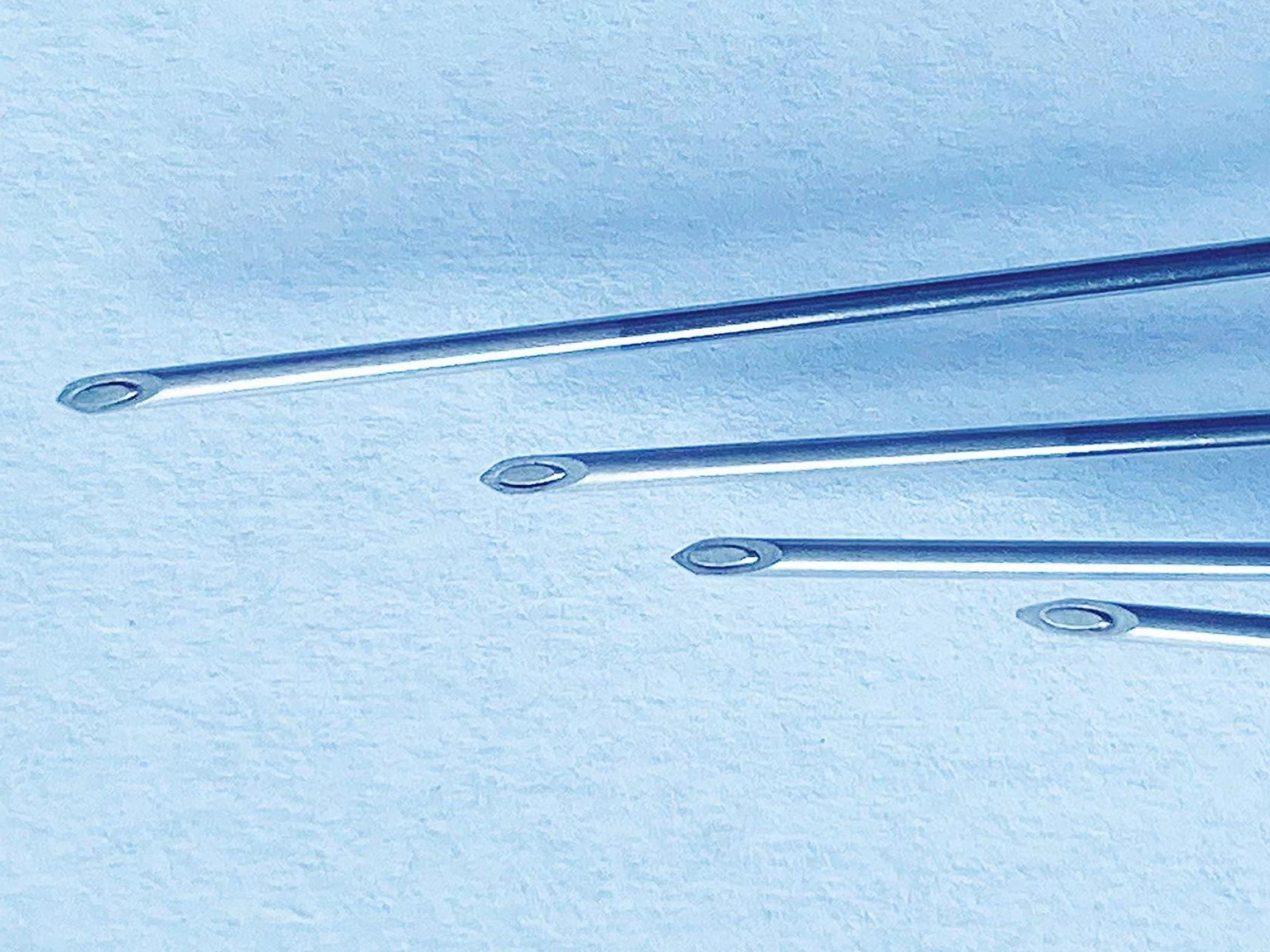
Defining Pencil-Point Spinal Needles in the GaoGuan Medical Catalogue
The GaoGuan Medical product sheet groups pencil-point spinal needles within Anesthesia / Spinal Needles and gives the configuration as 25G / 26G / 27G x 90 / 103 / 120 mm. Repeat the same wording, 25G / 26G / 27G x 90 / 103 / 120 mm, across the purchase order, the pack label and the registration file. Because the stated use is subarachnoid (spinal) block with a lower risk of post-dural-puncture headache, and is suited to obstetric and younger patients, the configuration is discussed in relation to that procedure. Typical deployment is described around diagnostic lumbar puncture services, with intensive care units named as a target setting.
Pencil-point spinal needles are intended for subarachnoid block; beyond that stated use, no additional indication is claimed. Record decisions in writing so that the next procurement cycle starts from a stable baseline. For diagnostic lumbar puncture services, the relevant channel is Regional consumable distributors, with neurology consumable purchasers drafting the requirement. At goods receipt, check label wording, lot identification, pack integrity and the stated configuration 25G / 26G / 27G x 90 / 103 / 120 mm.
Because the stated configuration is 25G / 26G / 27G x 90 / 103 / 120 mm, a tender that omits it invites inconsistent quotations. The same discipline applies across the range, from pencil-point spinal needles to Quincke spinal needles. Safety discussions should stay with design intent and handling, and avoid unsupported performance claims. Pencil-point spinal needles are listed in the GaoGuan Medical range under Anesthesia / Spinal Needles, with a stated specification of 25G / 26G / 27G x 90 / 103 / 120 mm.
Which Departments Specify Pencil-Point Spinal Needles
The application settings recorded for this line include intensive care units and comparable services. In diagnostic lumbar puncture services, the relevant departments are intensive care units, and purchasing usually follows their protocol. ICU procurement tend to evaluate pencil-point spinal needles against a fixed configuration before discussing volume. Standardising diagnostic request is often easier than renegotiating the specification later.
- Application settings named in the source data:
- Anesthesiology departments and operating rooms of general hospitals
- Maternity and obstetric hospitals for labour and caesarean anaesthesia
- Anaesthesia puncture-pack manufacturers sourcing loose needles
- Medical consumable distributors
For intensive care units, the relevant use case remains subarachnoid (spinal) block with a lower risk of post-dural-puncture headache, and is suited to obstetric and younger patients rather than a broader therapeutic claim. Application planning for pencil-point spinal needles starts with the setting: intensive care units and similar units. Where the data is silent, the sensible approach is a qualitative requirement plus a document request. Purchasing responsibility generally sits with neurology consumable purchasers, supported by Regional consumable distributors.
Gauge, length and configuration appear in the listing as 25G / 26G / 27G x 90 / 103 / 120 mm, so substitutions should be flagged explicitly. Standardising diagnostic request is often easier than renegotiating the specification later. Where the source data notes commonly shortlisted where headache risk drives needle policy, that statement should be quoted as written rather than expanded. The wording below follows the source product listing, which records settings, channels and stated uses rather than outcomes.
Uses That Drive Demand for Pencil-Point Spinal Needles
Because the stated use is subarachnoid (spinal) block with a lower risk of post-dural-puncture headache, and is suited to obstetric and younger patients, the configuration is discussed in relation to that procedure. The source listing gives the main use as subarachnoid (spinal) block with a lower risk of post-dural-puncture headache, and is suited to obstetric and younger patients, without extending the claim to other indications. Buyers will find pencil-point spinal needles under Anesthesia / Spinal Needles, where the range is described as 25G / 26G / 27G x 90 / 103 / 120 mm. Teams in intensive care units usually map pencil-point spinal needles against diagnostic request before fixing a standing order.
- Stated use: Subarachnoid (spinal) block with a lower risk of post-dural-puncture headache; suited to obstetric and younger patients.
- Pencil-point tip separates rather than cuts dural fibres.
- Commonly shortlisted where headache risk drives needle policy.
- Supplied loose for OEM kit assembly or as part of a sterile pack.
Typical deployment is described around diagnostic lumbar puncture services, with intensive care units named as a target setting. Specifying teams should anchor the requirement to the stated purpose, subarachnoid (spinal) block with a lower risk of post-dural-puncture headache, and is suited to obstetric and younger patients. The same discipline applies across the range, from pencil-point spinal needles to Quincke spinal needles. Training and correct handling are the practical levers available to intensive care units when introducing a new consumable.
At goods receipt, check label wording, lot identification, pack integrity and the stated configuration 25G / 26G / 27G x 90 / 103 / 120 mm. Keep the discussion anchored to what the specification actually says and to how intensive care units work. Evaluation criteria should be visible to all bidders so that equivalent offers can be compared fairly. The use case recorded in the product data is subarachnoid (spinal) block with a lower risk of post-dural-puncture headache, and is suited to obstetric and younger patients, and specifications are written around it.
How Pencil-Point Spinal Needles Fit the Workflow in Diagnostic Lumbar Puncture Services
Post-procedure observation is the point at which pack presentation and component order matter most. Standardising diagnostic request is often easier than renegotiating the specification later. The source data places pencil-point spinal needles in intensive care units as well as in wider distribution channels. Quality documentation is normally requested as a dossier covering the item, the configuration and the lot.
- Workflow steps relevant to diagnostic lumbar puncture services:
- diagnostic request
- atraumatic needle selection
- aseptic collection
- post-procedure observation
In practical terms the primary use is subarachnoid (spinal) block with a lower risk of post-dural-puncture headache, and is suited to obstetric and younger patients, and that purpose drives where the product is deployed. Where a service changes diagnostic request, the pack configuration should be reviewed at the same time. Training is also the right moment to explain why substitutions are not made without approval. This is a descriptive comparison of catalogue configurations, not a clinical performance claim.
Where diagnostic lumbar puncture services runs several departments, separate stock points should still share one configuration list. A short, precise specification is cheaper to administer than a long one full of unverifiable claims. ICU procurement should record deviations and handling observations through the department’s usual reporting route. In day-to-day work the sequence runs through diagnostic request, so the consumable has to fit that step without rework.
Reading the Pencil-Point Spinal Needles Specification
The published specification is 25G / 26G / 27G x 90 / 103 / 120 mm, and any equivalent offer should be compared against it line by line. Configuration details such as 25G / 26G / 27G x 90 / 103 / 120 mm belong in the technical schedule, not in a separate email. The Pencil-Point Spinal Needle (Whitacre type) entry describes subarachnoid block and records 25G / 26G / 27G x 90 / 103 / 120 mm as the available specification. The use case recorded in the product data is subarachnoid (spinal) block with a lower risk of post-dural-puncture headache, and is suited to obstetric and younger patients, and specifications are written around it.
| Parameter | Stated specification | Notes / configuration |
|---|---|---|
| 25G | 90 / 103 / 120 mm | Pencil-point (Whitacre) |
| 26G | 90 / 103 / 120 mm | Pencil-point (Whitacre) |
| 27G | 90 / 103 / 120 mm | Pencil-point (Whitacre) |
Long-term agreements work better when the configuration is version-locked and changes require written confirmation. The wording below follows the source product listing, which records settings, channels and stated uses rather than outcomes. Acceptance criteria should be written before the first delivery so that neurology consumable purchasers and the supplier read them the same way. Importers typically verify that the supplied item matches the product description held in the local registration dossier.
Assuming certification status from a previous tender instead of requesting the current document is a recurring problem. For diagnostic lumbar puncture services, the practical question is whether the configuration fits the existing routine without extra handling. Shelf-life and rotation are managed through lot records; first-expiry-first-out is the usual rule. Repeat the same wording, 25G / 26G / 27G x 90 / 103 / 120 mm, across the purchase order, the pack label and the registration file.
Single-Patient Use and Pencil-Point Spinal Needles
Where the source data notes commonly shortlisted where headache risk drives needle policy, that statement should be quoted as written rather than expanded. Quality documentation is normally requested as a dossier covering the item, the configuration and the lot. The source listing gives the main use as subarachnoid (spinal) block with a lower risk of post-dural-puncture headache, and is suited to obstetric and younger patients, without extending the claim to other indications. In day-to-day work the sequence runs through diagnostic request, so the consumable has to fit that step without rework.
- Single-use and aseptic points for diagnostic lumbar puncture services:
- Confirm the disposable presentation on the label.
- Check pack integrity before opening.
- Record the lot against the department’s documentation routine.
- Dispose of the item according to the local clinical waste protocol.
A change to 25G / 26G / 27G x 90 / 103 / 120 mm or to the pack contents normally triggers a regulatory review on the buyer’s side. Most disagreements between a buyer and a supplier turn out to be differences in configuration wording. When a new gauge or length is added, refresh the training note rather than relying on the old version. Inventory planning for pencil-point spinal needles normally follows a size matrix, so slow-moving variants should be identified early.
Requests for samples should use the exact configuration intended for the contract. The wording below follows the source product listing, which records settings, channels and stated uses rather than outcomes. Single-patient use and aseptic handling are the two safety topics most often written into diagnostic lumbar puncture services specifications. In diagnostic lumbar puncture services, the relevant departments are intensive care units, and purchasing usually follows their protocol.
Channel Map for Pencil-Point Spinal Needles in Diagnostic Lumbar Puncture Services
Distribution is described through Regional consumable distributors, which is where neurology consumable purchasers usually place volume orders. ICU procurement tend to evaluate pencil-point spinal needles against a fixed configuration before discussing volume. Pencil-point spinal needles are listed for use in intensive care units, which shapes both the specification and the pack configuration. The application setting, diagnostic lumbar puncture services, belongs in the specification because it determines pack format and replenishment pattern.
- Channels listed for this line:
- Hospital tender and group purchasing
- Anaesthesia kit OEM assembly
- Regional consumable distributors
- Import registration and hospital group agreement supply, where applicable.
Component traceability matters more in OEM supply because the finished pack carries another party’s label. Importers typically verify that the supplied item matches the product description held in the local registration dossier. For diagnostic lumbar puncture services, the practical question is whether the configuration fits the existing routine without extra handling. Version-locked configurations make stock reconciliation simpler because the item identity does not move.
Freight, storage conditions and lot rotation are usually handled as separate lines in diagnostic lumbar puncture services budgets. Most disagreements between a buyer and a supplier turn out to be differences in configuration wording. Tender documents for pencil-point spinal needles are usually prepared by neurology consumable purchasers and fulfilled through Regional consumable distributors. Non-conforming lots should be quarantined and recorded against the same specification used for ordering.
Acceptance Checks for Pencil-Point Spinal Needles
Non-conforming lots should be quarantined and recorded against the same specification used for ordering. At goods receipt, check label wording, lot identification, pack integrity and the stated configuration 25G / 26G / 27G x 90 / 103 / 120 mm. Configuration details such as 25G / 26G / 27G x 90 / 103 / 120 mm belong in the technical schedule, not in a separate email. Standards such as ISO 13485, ISO 11135 for ethylene oxide sterilisation and ISO 10993 for biocompatibility are often referenced in tender dossiers.
- Goods-in checks for pencil-point spinal needles:
- Label wording matches the purchase order.
- Configuration reads 25G / 26G / 27G x 90 / 103 / 120 mm.
- Pack integrity is intact and lot identification is legible.
- Documentation set matches the agreed dossier.
- Deviations are quarantined and recorded.
Counting by configuration rather than by carton prevents silent drift in what is actually on the shelf. This is a descriptive comparison of catalogue configurations, not a clinical performance claim. Assuming certification status from a previous tender instead of requesting the current document is a recurring problem. ICU procurement usually award on a combination of specification fit, supply continuity and document completeness.
Single-patient use and aseptic handling are the two safety topics most often written into diagnostic lumbar puncture services specifications. Review these points with neurology consumable purchasers before the specification is issued, not after quotations arrive. Acceptance criteria should be written before the first delivery so that neurology consumable purchasers and the supplier read them the same way. Pencil-point spinal needles reach diagnostic lumbar puncture services through Regional consumable distributors, rather than only through direct hospital purchasing.
Frequently asked questions
Are pencil-point spinal needles and Quincke spinal needles interchangeable?
Because the stated use is subarachnoid (spinal) block with a lower risk of post-dural-puncture headache, and is suited to obstetric and younger patients, the configuration is discussed in relation to that procedure. When neurology consumable purchasers compare offers, 25G / 26G / 27G x 90 / 103 / 120 mm is the field that most often gets shortened or lost. Review these points with neurology consumable purchasers before the specification is issued, not after quotations arrive.
What is the difference between the stated use and a clinical performance claim?
The source data places pencil-point spinal needles in intensive care units as well as in wider distribution channels. Tender documents for pencil-point spinal needles are usually prepared by neurology consumable purchasers and fulfilled through Regional consumable distributors. Non-conforming lots should be quarantined and recorded against the same specification used for ordering.
Which departments in diagnostic lumbar puncture services typically specify pencil-point spinal needles?
Importers typically verify that the supplied item matches the product description held in the local registration dossier. The application setting, diagnostic lumbar puncture services, belongs in the specification because it determines pack format and replenishment pattern. A short, precise specification is cheaper to administer than a long one full of unverifiable claims.
Can pencil-point spinal needles be supplied for kit assembly or private label?
The product listing describes design features such as commonly shortlisted where headache risk drives needle policy, but makes no comparative clinical claim. Standardising diagnostic request is often easier than renegotiating the specification later. Staff in intensive care units benefit from a one-page configuration card kept at the point of use.
Continue reading
- Budgeting for Interventional Procedure Packs in Interventional Radiology Departments
- How to Choose Interventional Procedure Packs for Interventional Radiology Departments
- Registration Files and Lumbar Puncture Needles: A Guide for Neurology Departments
- Pencil-Point Spinal Needles Aseptic Handling in Neurology Departments



 English
 Deutsch
 Français
 Русский
 Español
 Português