Indonesia is Southeast Asia’s largest population market, and its device regime rewards preparation: registrations run through the Ministry of Health (Kemenkes) online systems, and two terms — AKD and AKL — decide who holds what. This guide explains Indonesia medical device registration for single-use anesthesia consumables, including the halal compliance angle that catches many first-time importers by surprise.
Regulatory Framework: Kemenkes and Online Systems
The Ministry of Health regulates devices under the Health Law and its implementing regulations, with registration managed through the Kemenkes e-catalog / online registration systems (K3L, OSS-linked business licensing) (current system naming and scope confirmed with our regulatory team). The core concepts:
- AKD (Alamat Kedudukan Distributor) — the domestic distribution authorization held by in-country companies.
- AKL (Angka Klaim… / distributor license for imported products) — the import product license certificate held for devices manufactured abroad (current system naming and scope confirmed with our regulatory team).
In practice: AKD is about who can distribute domestically; AKL is the product-level import certificate your device needs. Both sit with Indonesian legal entities — a foreign manufacturer cannot hold them.
Device Classification: Classes A–D
| Class | Risk | Examples (final classification confirmed case by case) | Route |
|---|---|---|---|
| A | Low | Simple accessories | Registration, lighter review |
| B | Low-moderate | Single-use needles, tourniquets | Registration |
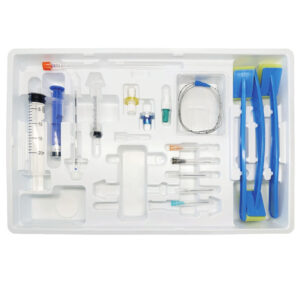
| C | Moderate-high | Epidural/spinal kits, nerve block needles | Registration, deeper review |
| D | High | — generally not in our range | Registration, deepest review |
Registration Pathway
| Step | Action | Responsibility |
|---|---|---|
| 1 | Indonesian entity obtains business licensing (OSS) and AKD | Importer |
| 2 | Manufacturer document package + authorization letter | Gaoguan |
| 3 | AKL application per device family through Kemenkes online system | Importer/holder |
| 4 | Technical and administrative review (timeline confirmed at inquiry) | Kemenkes |
| 5 | AKL issued; import shipments processed under it | Importer |
Dossiers expect: FSC, ISO 13485 evidence, technical descriptions, labeling, test reports and reference-market approvals (CE marking commonly used) (reference approvals accepted under current rules).
Halal Compliance Considerations
Indonesia’s Halal Product Assurance Law (Law 33/2014) with its phased mandatory certification has been extending toward medical devices and healthcare products (current system naming and scope confirmed with our regulatory team). Practical guidance for our product category:
- Needles, kits and packs made of metal and polymer materials with no animal-derived substances are positioned favorably.
- Where halal certification applies, it runs through BPJPH-recognized processes — plan it alongside, not after, device registration.
- Material declarations from the factory (no animal-derived components) support both halal assessment and biocompatibility files — our single-use range is polymer/metal based (material declaration format confirmed with our regulatory team).
Dossier Checklist (What Gaoguan Provides)
- ISO 13485 certificate
- CE certificate / Declaration of Conformity
- Free Sale Certificate (current timelines and official fees confirmed at inquiry)
- Technical description, labeling, IFU (Indonesian-language labeling per regulations; confirmed by our regulatory team at inquiry)
- Bench data: needles to ISO 7864, tubing to ISO 9626; pack validation referenced to ISO 11607
- Sterilization validation (EO/gamma) and biocompatibility summaries — background in our EO vs gamma sterilization guide
- Material declarations (animal-derivative-free statement) supporting halal assessment (confirmed with our regulatory team)
- Authorization letter appointing the AKL holder
Common Pitfalls for First-Time Importers
- Two-stage licensing: companies often budget only for the AKL (product) stage and discover the AKD (company distribution authorization) and OSS business licensing stages afterwards — plan the full chain.
- Halal timeline collision: leaving halal assessment until after device registration forces rework; run material declarations and any required certification in parallel.
- Labeling language: Indonesian-language labeling expectations apply to marketed product — align artwork before the first AKL-backed shipment.
- Holder portability: AKL is held by the Indonesian entity; an independent holder keeps the certificate portable across distributor relationships.
Timelines and Costs
Review depth scales with class; combined with OSS/AKD setup, first-market-entry projects should plan for both company licensing and product licensing stages. (current timelines and official fees confirmed at inquiry)
How Gaoguan Supports Indonesian Importers
We manufacture epidural/spinal kits, acupuncture needles, tourniquets and the full puncture range under ISO 13485 with CE marking, with OEM/ODM flexibility for Indonesian labeling. Our document package is built for AKL dossiers and supports halal-related material declarations. Regional comparison: see our Vietnam import requirements guide for the neighboring regime.


 English
 Deutsch
 Français
 Русский
 Español
 Português