
Ethylene oxide (EO) and gamma irradiation are both compatible with most single-use anesthesia kits, but they are not interchangeable for every component. EO sterilization uses low temperature (typically 37-63°C) and works on heat- and moisture-sensitive polymers, while gamma sterilization uses ionizing radiation and works best on radiation-stable plastics and metals. The practical rule: check the material of the catheter, needle hub, and connector, then match it to the method the manufacturer validated. After reading this guide, you will be able to classify each part of an anesthesia kit by material, pick the correct sterilization method, and run a basic compatibility check before committing a batch.
Table of Contents
How EO and Gamma Sterilization Work
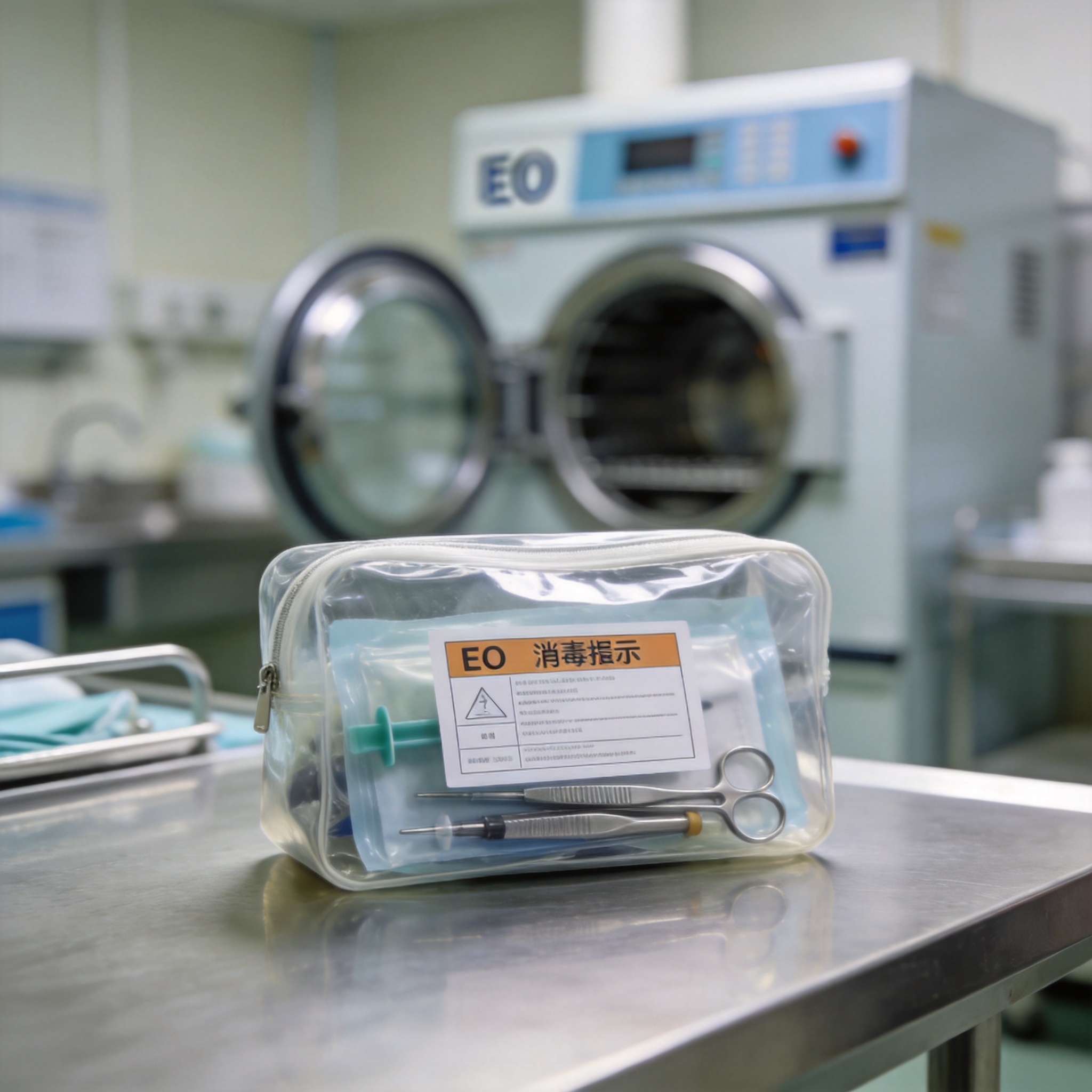
EO sterilization kills microorganisms by alkylating proteins and DNA. Because it runs at low temperature, it does not melt or deform the polymers used in epidural and spinal kits. The trade-off is that EO is a toxic gas, so every kit must be aerated until residual EO and ethylene chlorohydrin fall below the limits set in ISO 10993-7. That aeration step adds hours to days to the cycle.
Gamma sterilization uses cobalt-60 radiation to break microbial DNA directly. It is a continuous, high-throughput process with no aeration wait, and the dose is measured in kilograys (kGy). The typical industrial dose for medical devices sits in the 25-40 kGy range, which is enough to achieve a sterility assurance level (SAL) of 10-6. The trade-off is that ionizing radiation can cross-link or scission polymer chains, so radiation-sensitive materials may yellow, embrittle, or lose tensile strength.
The materials in a modern anesthesia kit determine which method applies. According to the reference configuration for these kits, the components include a German Braun-style epidural puncture needle, a pencil-point lumbar anesthesia needle, and an optional reinforced anesthesia tube with a built-in steel wire coil. Each of these behaves differently under EO and gamma.
| Component | Typical material | EO compatibility | Gamma compatibility |
|---|---|---|---|
| Epidural puncture needle | Stainless steel | Yes | Yes |
| Pencil-point lumbar needle | Stainless steel | Yes | Yes |
| Reinforced anesthesia tube | Polymer + steel wire coil | Yes | Usually yes; verify dose |
| Non-invasive catheter tip | Silica gel | Yes | Verify — silicones vary |
| 360° cm scale markings | Radiopaque ink/pigment | Yes | Verify color shift |
Two features of the reference kit are worth noting for sterilization planning. First, the reinforced catheter contains a built-in steel wire coil for tensile resistance, and the inner wall channel stays unobstructed when the catheter is twisted at any angle. Metal coils are radiation-stable, but the surrounding polymer is the limiting factor, not the wire. Second, the 360° cm scale markings are radiopaque, meaning X-rays cannot penetrate them. Radiopaque pigments are usually mineral-filled, and some mineral fillers can shift color under gamma, so verify appearance after irradiation.
Step-by-Step: Matching a Kit to a Method
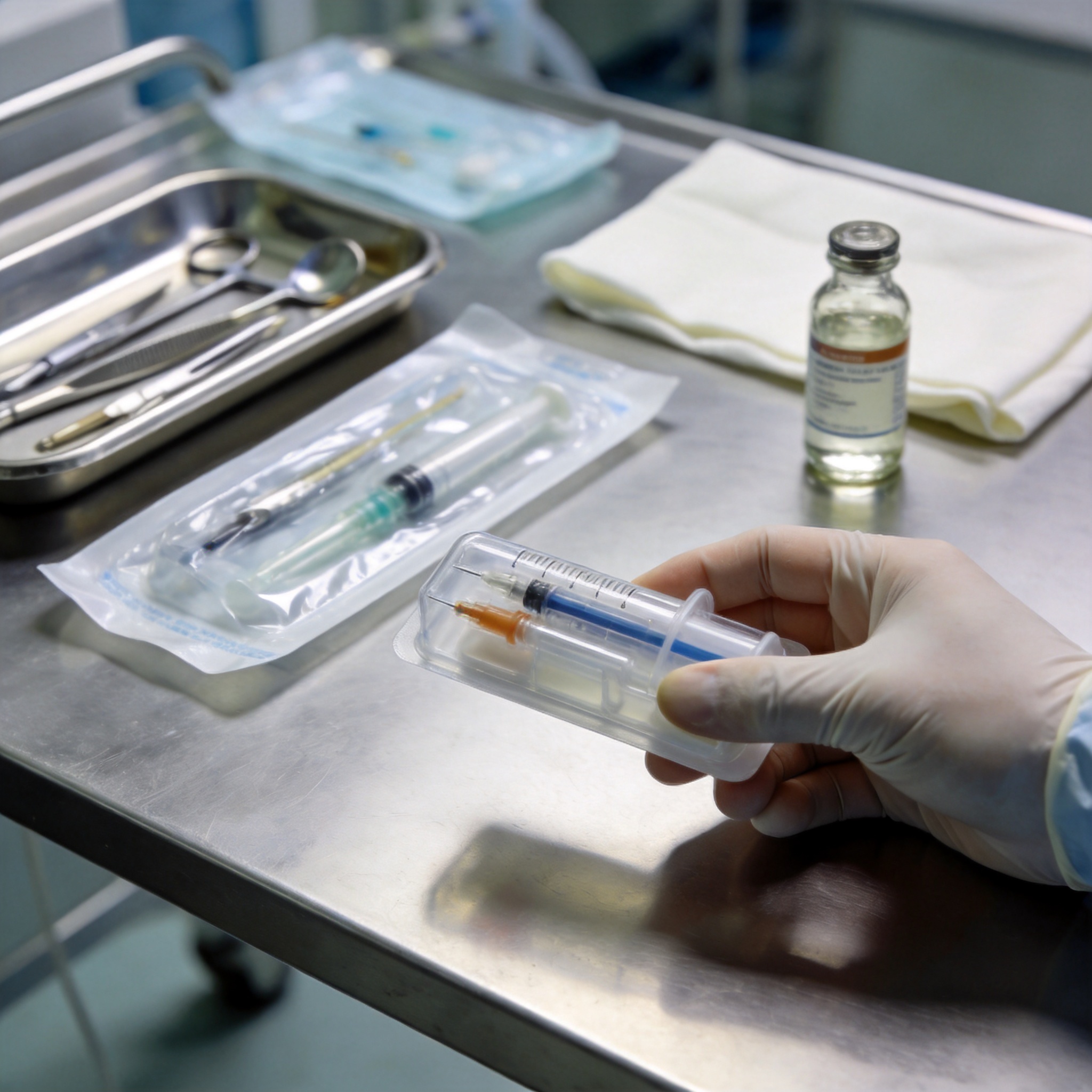
Follow these steps in order. Each step produces one decision, and you can stop at any step where the answer is already fixed by the manufacturer’s validated instructions.
- Collect the material list for every component. Write down the polymer, metal, and coating for the catheter, needle hub, connectors, filter, and any printed markings. Do not skip the markings — radiopaque ink is a real component.
- Check the manufacturer’s validated sterilization method. If the kit is already labeled “sterilized by EO” or “sterilized by gamma,” that label is the answer. Do not re-sterilize a single-use kit.
- Identify radiation-sensitive materials. Flag any component made of polypropylene, PTFE, acetal, or certain silicones. These are the parts most likely to fail under gamma.
- Identify heat- and moisture-sensitive materials. Flag any component that would deform above roughly 60°C or that absorbs moisture. These favor EO over steam, and EO over gamma only if radiation is also a problem.
- Apply the decision rule. If all components are radiation-stable metals and radiation-stable polymers, gamma is the faster, cheaper route. If any component is radiation-sensitive, choose EO. If both routes are blocked, redesign the component rather than force a method.
- Confirm the dose or cycle parameters. For gamma, confirm the validated dose in kGy against the material’s radiation tolerance. For EO, confirm temperature, humidity, gas concentration, and the aeration time needed to meet ISO 10993-7 residual limits.
- Run a small qualification batch. Sterilize a minimum of three kits per method and inspect for deformation, discoloration, cracking, or loss of the catheter’s tensile resistance.
- Test function after sterilization. Confirm the needle inserts smoothly into the simulated epidural space, the catheter slides through tissue-like material without grabbing, and the inner channel remains open when the catheter is twisted.
- Document and lock the parameters. Record the method, dose or cycle, batch number, and inspection results. Any change to a material or supplier requires re-qualification.
For step 8, the reference design gives you concrete functional checkpoints. The improved needle head is designed so the needle feel is obvious and it enters the epidural cavity smoothly while protecting the catheter from damage. The pencil-point lumbar needle is designed to minimize injury and reduce the probability of postoperative pain. The silica gel catheter tip is designed to slide smoothly past nerves and blood vessels. If any of these behaviors change after sterilization, the method or dose is wrong for that component.
Common Mistakes and How to Fix Them
Mistake 1: Assuming EO and gamma are freely interchangeable. Symptom: a batch passes sterility testing but the catheter feels stiff or the connector cracks during assembly. Fix: treat the method as a material decision, not a scheduling decision. Re-run the material list from step 1 and re-qualify under the correct method.
Mistake 2: Ignoring the radiopaque markings. Symptom: the 360° cm scale markings fade or shift color after gamma, making depth reading harder under fluoroscopy. Fix: since X-rays cannot penetrate these markings, they must stay intact for the catheter to be usable. Test marking appearance after irradiation, and if it degrades, move the kit to EO.
Mistake 3: Skipping aeration validation for EO. Symptom: the kit passes sterility but fails residual EO or ethylene chlorohydrin limits. Fix: extend aeration time and re-test residuals against ISO 10993-7. EO leaves chemical residue; gamma does not, so this failure mode is unique to EO.
Mistake 4: Over-dosing gamma “to be safe.” Symptom: the reinforced catheter’s polymer becomes brittle even though the steel wire coil is fine. Fix: the wire coil is radiation-stable, but the polymer jacket is not infinitely tolerant. Return to the validated dose and do not exceed it.
Mistake 5: Re-sterilizing a single-use kit. Symptom: unpredictable material failure and no valid sterility claim. Fix: never re-sterilize. The validated method and dose apply to the original manufacturing cycle only.
FAQ
Can I gamma-sterilize an anesthesia kit that contains a steel wire coil? Yes. Stainless steel is radiation-stable, and the coil itself will not degrade. The part you must verify is the polymer surrounding the coil, because that polymer carries the tensile resistance and the twist flexibility.
Does EO sterilization damage the silica gel catheter tip? EO is generally gentle on silicones because it runs at low temperature. The main EO concern is residual gas, not material damage, so aeration validation matters more than material choice here.
Which method is faster? Gamma. It is a continuous process with no aeration step. EO requires a conditioning phase, the gas exposure phase, and then aeration to reduce residuals, so total cycle time is longer.
How do I know if my kit is compatible with gamma? Check the material list against known radiation-sensitive polymers such as polypropylene, PTFE, and acetal. If none are present, and the manufacturer’s validated dose is respected, gamma is normally compatible. If any are present, choose EO or consult a qualified sterilization professional.
Do the radiopaque scale markings survive both methods? They survive EO reliably. Under gamma, verify appearance after irradiation, because some radiopaque pigments shift color. If the markings degrade, the depth-reading function is compromised, so switch the kit to EO.
References and Further Reading
- ISO 11135 — Sterilization of health-care products: Ethylene oxide requirements for the development, validation and routine control of a sterilization process.
- ISO 11137 — Sterilization of health care products: Radiation, including dose-setting and dose-auditing methods.
- ISO 10993-7 — Biological evaluation of medical devices, Part 7: Ethylene oxide sterilization residuals.
- U.S. Food and Drug Administration — Sterilization of Medical Devices.
- U.S. Centers for Disease Control and Prevention — Disinfection and Sterilization Guideline.
Disclosure: This article describes material-level compatibility principles and does not recommend any specific sterilization service, equipment brand, or product. Always follow the device manufacturer’s validated instructions and consult a qualified sterilization professional before changing a validated process.


 English
 Deutsch
 Français