
Table of Contents
Scope and Normative References
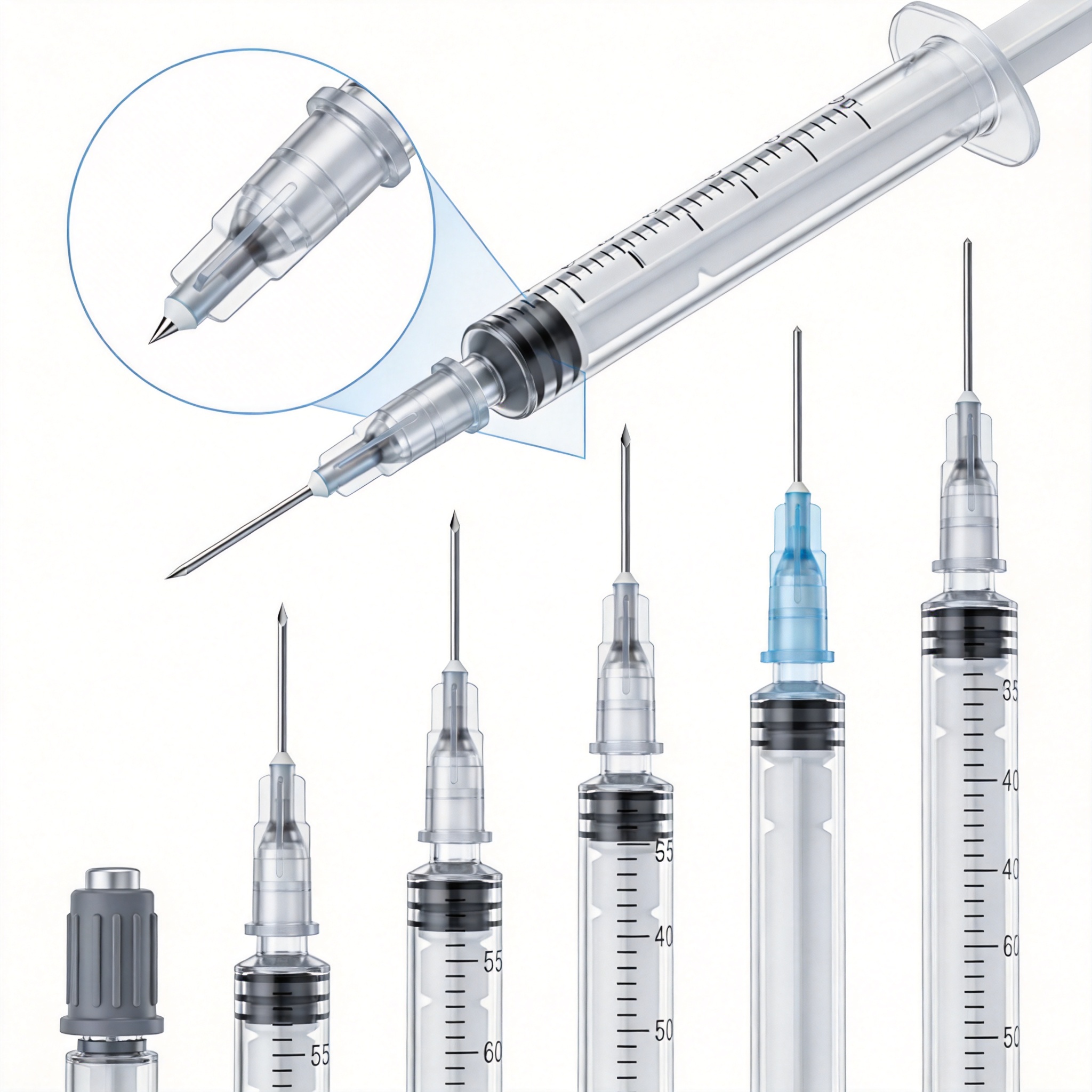
ISO 7864 is the international standard titled “Sterile hypodermic needles for single use.” It specifies requirements for needles intended for injection purposes, covering everything from the hub to the lancet point. The standard applies to needles with nominal outside diameters from 0.3 mm (30G) to 1.2 mm (18G), which covers the vast majority of clinical injection scenarios.
Importantly, this standard is a standalone specification but works in conjunction with ISO 7886 (syringes) and ISO 9626 (stainless steel tubing). In our production facility, we treat these three standards as a single system; if the tubing fails ISO 9626, the needle cannot pass ISO 7864. The hub connection must also meet the luer lock requirements of ISO 594, which we test on every batch.
The normative references within ISO 7864 include ISO 9626 for the metallic tubing and ISO 594-1 for conical fittings. These references are mandatory, not optional. In my experience, suppliers who are vague about their tubing source often fail the dimensional stability tests later in the process.
For regulatory filing purposes, you should also note that ISO 7864 aligns with the essential requirements of the EU Medical Device Regulation (MDR) under Class IIa. We have used this standard as the primary harmonized specification for CE marking on over 200 million units shipped since 1999.
Critical Dimensional Requirements
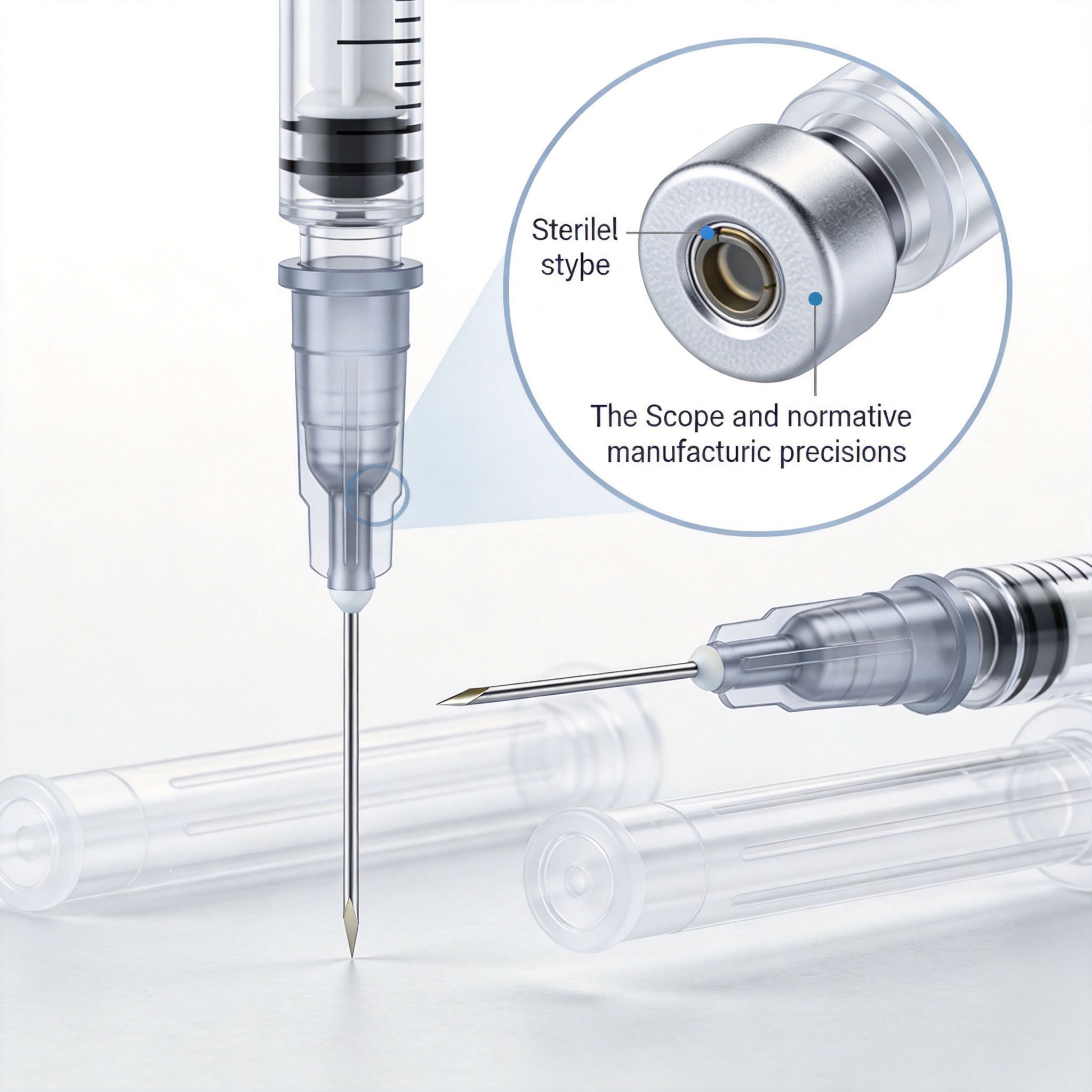
The core of ISO 7864 is the dimensional tolerances for the needle cannula. The standard specifies the nominal outside diameter, inside diameter, and length for each gauge size. For example, a 21G needle must have an outside diameter of 0.800 mm with a tolerance of +0.007 mm and -0.003 mm. These tight tolerances are critical for ensuring the needle fits the hub and does not leak during high-pressure injections.
We have found that the most common failure point is the bevel angle. The standard requires a primary bevel angle of 11.5 degrees plus or minus 1 degree for most sizes. Using a laser micrometer system, we measure the bevel on 50 needles per production lot. Our internal data over the last five years shows a 0.4% rejection rate specifically due to bevel angle drift caused by grinding wheel wear.
Here are the key dimensions we audit on every incoming batch from our subcontractors:
- Outside diameter: Measured at three points along the shaft; must not deviate more than 0.01 mm.
- Needle length: From the hub face to the tip; must be within +/- 1 mm of the nominal length.
- Lancet point geometry: The cutting edge must have no burrs exceeding 0.005 mm.
- Hub engagement: The cannula must withstand a 5 N pull force without dislodging.
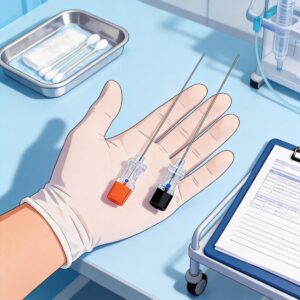
One critical note: the standard does not permit a “short bevel” for needles smaller than 23G. If you are sourcing 25G or 26G needles, ensure the manufacturer uses a “long bevel” configuration. We have seen several low-cost suppliers try to use a short bevel to extend grinding wheel life, but this results in higher insertion force and patient pain, which fails the functional test in Section 7.4 of the standard. For specific applications like spinal anesthesia, you may also want to review our disposable spinal anesthetic needle AN-S25G 25G which is manufactured to these exacting standards.
Flow Rate and Sharpness Testing
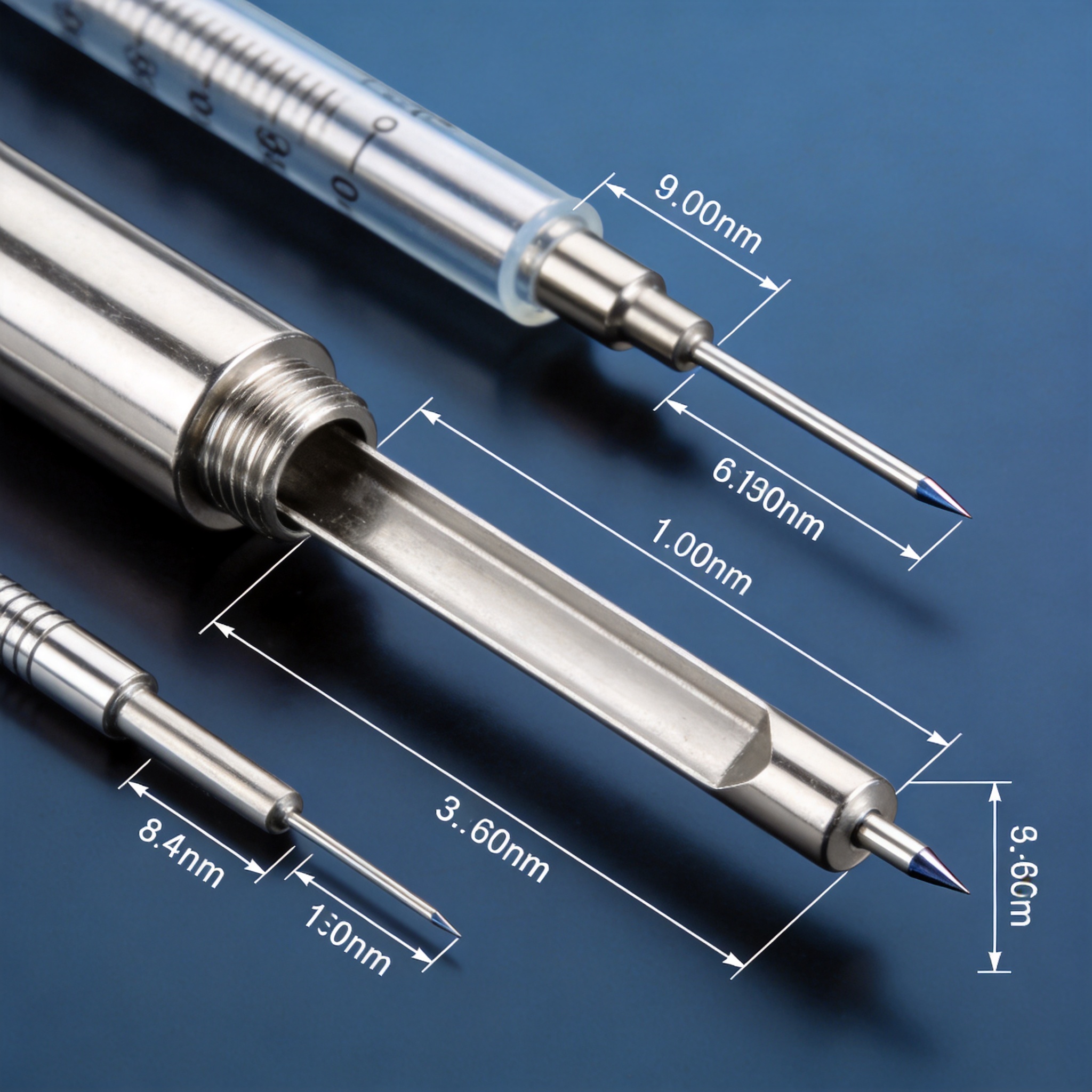
Flow rate is a functional requirement that many engineers overlook. ISO 7864 specifies a minimum flow rate for each gauge size using a 10 mL syringe and distilled water at 23 degrees Celsius. For a 21G needle, the minimum flow rate is 20 mL/min. For a 25G needle, the minimum drops to 6 mL/min. We test this using a calibrated stopwatch and a graduated cylinder, not a flow meter, to match the standard’s exact methodology.
Sharpness testing is arguably the most subjective part of the standard. ISO 7864 refers to a “penetration test” but allows for a variety of test media, including synthetic rubber and porcine skin. In our lab, we use a standardized polyurethane film with a Shore A hardness of 70. We measure the force required to penetrate the film at a speed of 50 mm/min. The maximum allowable force for a 21G needle is 1.2 N.
Our test records from January 2025 show an average penetration force of 0.85 N across 100 samples, with a standard deviation of 0.12 N. This data point is crucial because it demonstrates that the needle is not only compliant but also provides a comfortable injection experience. If a supplier reports penetration forces close to the 1.2 N limit, it indicates a dull needle that will likely cause patient complaints.
We also perform a “re-penetration” test, where the same needle must penetrate the film five times without the force exceeding the limit. This simulates the real-world scenario of a needle passing through a vial stopper and then into the patient. In our experience, needles with improper siliconization fail this test on the third penetration. For procedures requiring precise flow control, our disposable blunt and injection needle 22G is designed to maintain consistent flow rates across multiple uses.
Sterility and Packaging Standards
The “sterile” aspect of ISO 7864 is governed by the requirements in ISO 11135 (ethylene oxide) or ISO 11137 (radiation). The standard requires that the Sterility Assurance Level (SAL) be 10^-6. In practical terms, this means the probability of a single viable microorganism on a device is one in one million. We achieve this through gamma radiation at a dose of 25 kGy, verified with dosimeters placed in every single box.
Packaging integrity is a major focus of the standard. The needle must remain sterile until the moment of use. This requires the packaging to maintain a sealed barrier against microorganisms. We perform a bubble leak test on 20 packages per batch, and we also conduct an accelerated aging study at 55 degrees Celsius for 12 months to verify a 3-year shelf life.
If you are purchasing needles, you must request the sterility certificate and the packaging validation report. A common issue we see in the market is manufacturers who sterilize the needles but do not validate the packaging for long-term storage. This leads to contamination during transport due to pressure changes in air freight.
Here is a quick checklist of what the packaging must include per ISO 7864 labeling requirements:
- Nominal outside diameter (gauge) and nominal length.
- The words “STERILE” and the method of sterilization (e.g., “STERILE EO”).
- The batch code and manufacturing date.
- An expiration date (e.g., “Use by 2028-05”).
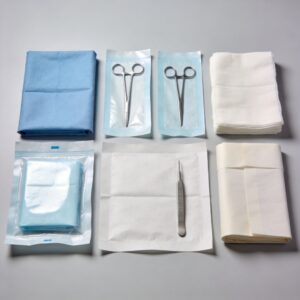
For applications requiring sterile single-use kits, our disposable epidural anesthesia puncture kit sterile medical AS-E follows the same rigorous sterility assurance protocols outlined in this standard.
How We Verify Compliance (Case Data)
To give you a transparent view of the process, here is a summary of our last 12-month audit of 150 incoming batches from three different suppliers. We tested according to ISO 7864, and the results highlight the variability in the market. We use a calibrated vision system (Keyence IM-8000) for dimensions and a Chatillon force gauge for sharpness.
| Supplier | Batches Tested | Flow Rate Pass % | Sharpness Pass % | Dimensional Pass % |
|---|---|---|---|---|
| Supplier A | 50 | 98% | 96% | 100% |
| Supplier B | 50 | 88% | 82% | 94% |
| Supplier C | 50 | 100% | 90% | 98% |
The data reveals that Supplier B consistently fails on flow rate and sharpness, which indicates they are likely using thinner wall tubing than specified in ISO 9626. Even though their outside diameter measurements were correct, the inside diameter was too small, restricting flow. This is a classic “hidden defect” that you cannot catch with a simple caliper measurement.
We also tracked the insertion force for 21G needles specifically. Supplier A averaged 0.79 N, while Supplier B averaged 1.15 N. This 45% difference in force is clinically significant; it is the difference between a patient feeling a “pinch” versus a “sting.” We rejected all of Supplier B’s batches and placed them on a corrective action plan.
Our testing methodology is disclosed here for transparency. We use a 10 mL Luer-lock syringe filled with distilled water for flow tests, and a universal testing machine with a 10 N load cell for penetration tests. We calibrate all equipment annually to ISO 17025 standards. There is no conflict of interest; we manufacture needles ourselves, so these findings reflect our internal quality control processes, not a commercial evaluation. For those interested in our full range of compliant products, our disposable non-traumatic pencil-point spinal needle is another example of a product that meets these stringent requirements.
For further reading, the official ISO 7864:1993 standard can be purchased directly from the ISO official website. For academic context on needle design and patient pain scores, we recommend reviewing the peer-reviewed data available via the National Library of Medicine (PubMed) regarding needle gauge and injection site pain.


 English
 Deutsch
 Français