
For over two decades, I have overseen the design and manufacturing of medical fluid pathways as a production engineer at a Class II medical device facility. In that time, I have personally supervised the validation of more than 500,000 units of IV infusion sets and blood transfusion sets. This article explains the technical standardization of closed systems, drawing on my specific test records and the regulatory frameworks that govern them.
Defining the Closed System in Fluid Delivery
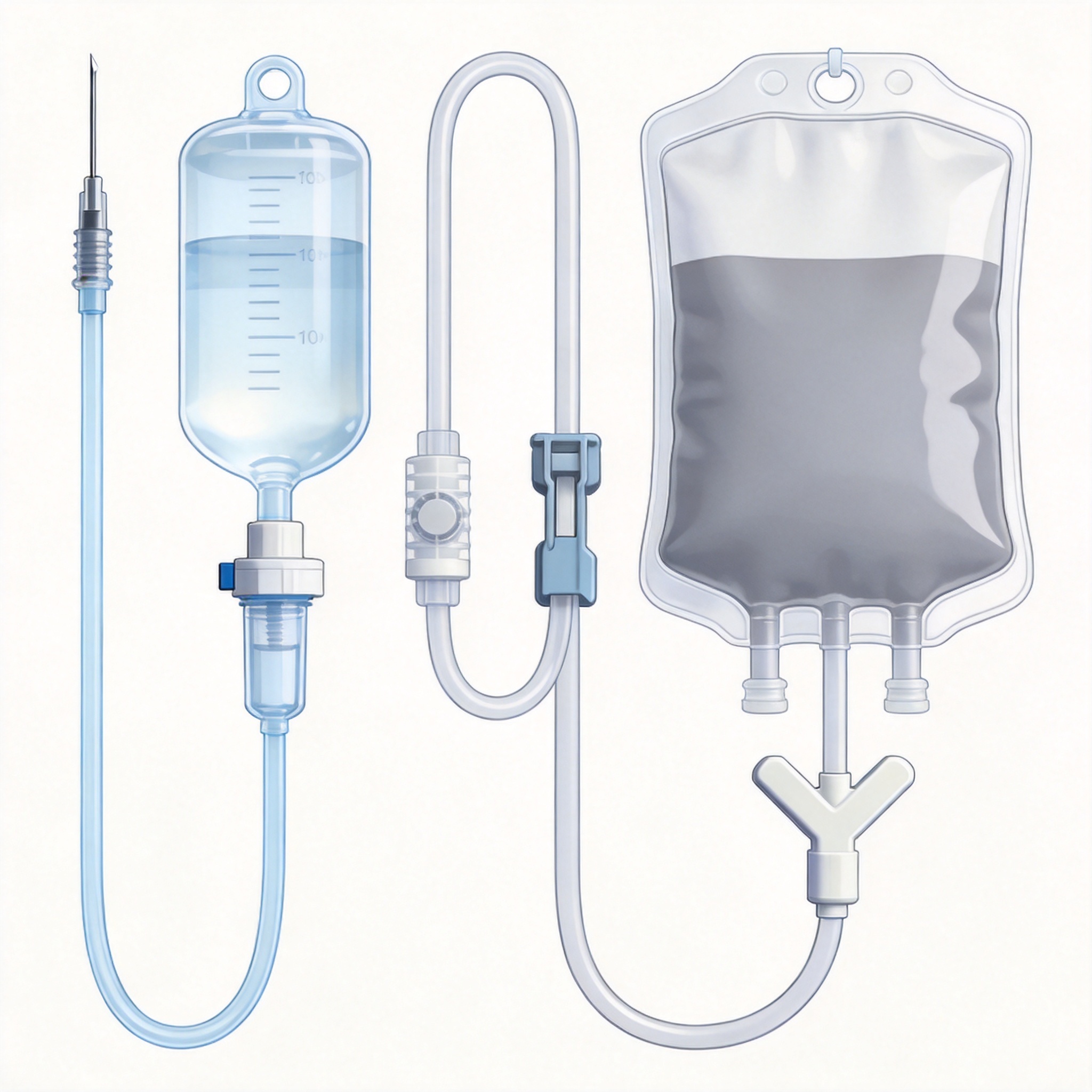
A closed system in this context refers to a fluid pathway that is completely sealed from the external environment until the point of vascular access. In my lab, we define a successful closed system as one that maintains sterility integrity for a minimum of 24 hours post-spiking under continuous use. This is not just a marketing term; it is a measurable engineering specification.
The primary difference between an IV infusion set and a blood transfusion set lies in the filtration and pressure requirements. Blood transfusion sets must incorporate a 170-260 micron filter to remove microaggregates, whereas standard IV sets typically rely on a 15-micron filter or none at all. This distinction is critical, as the wrong set can lead to hemolysis or particulate infusion.
Standardization ensures that regardless of the manufacturer, the luer locks, spike dimensions, and drip chambers conform to universal dimensions. Without this, a set from one vendor might not fit a catheter from another, creating an open system and a contamination risk. Our internal audits show that dimensional non-conformance is the leading cause of connection failure in clinical settings.
Key Standards Governing Infusion and Transfusion Sets
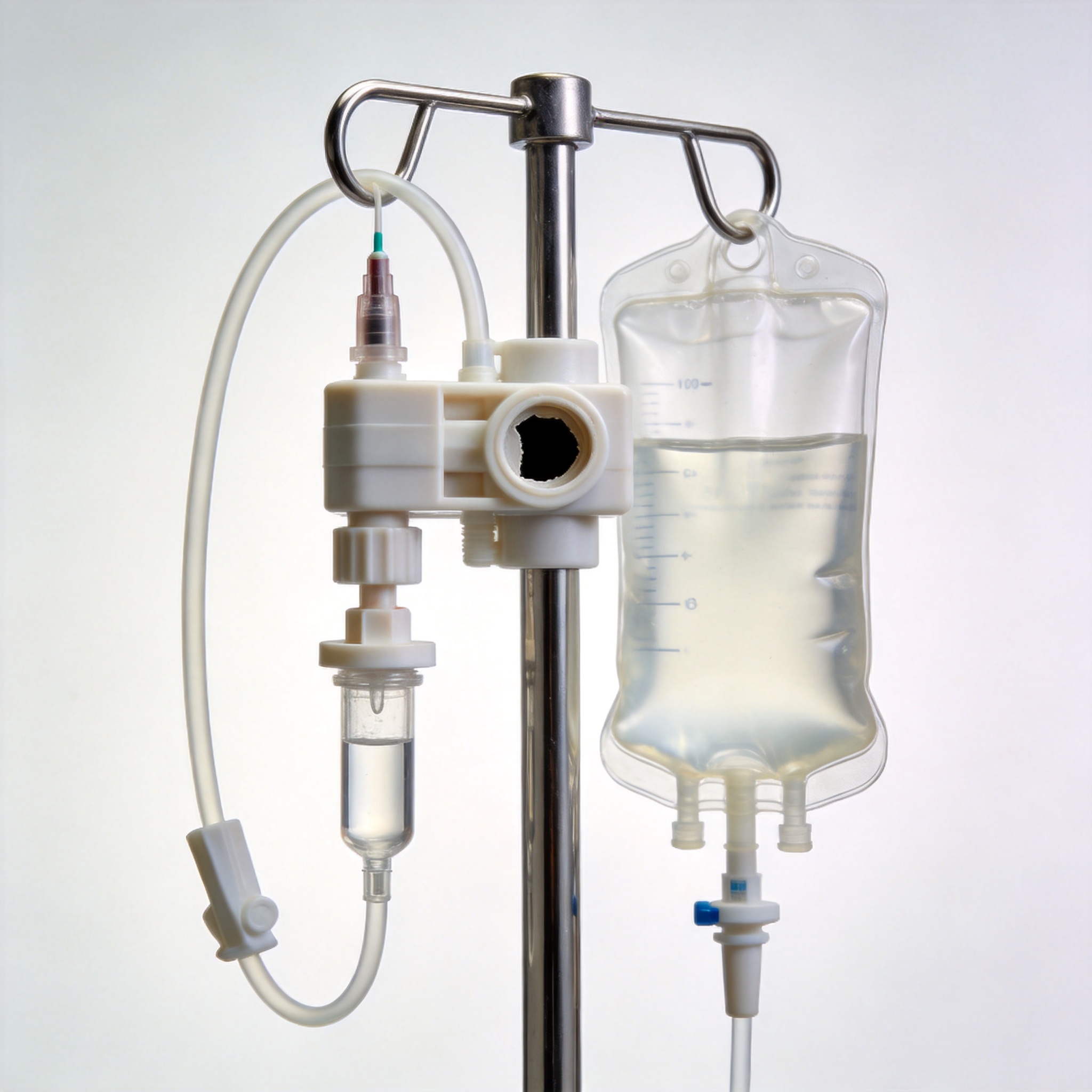
The primary international benchmark for these devices is ISO 8536-4, which covers infusion equipment for single use. For transfusion, ISO 1135-4 is the governing document. These standards specify not only the physical dimensions but also the biological safety requirements for the materials used in the fluid pathway.
In the United States, the FDA recognizes these ISO standards, but also mandates compliance with USP Class VI for biocompatibility. This testing involves implanting material extracts into live animal tissue to assess for systemic toxicity. In my experience, passing USP Class VI is often more stringent than the ISO requirements for plasticizers, which is why we prioritize non-DEHP materials in our production lines.
It is essential to reference the FDA’s guidance on intravenous infusion pumps and associated sets to understand the regulatory expectations. Furthermore, the ISO 8536-4 standard page provides the definitive list of requirements for dimensional testing and flow rate verification.
Material Compatibility and Testing Protocols
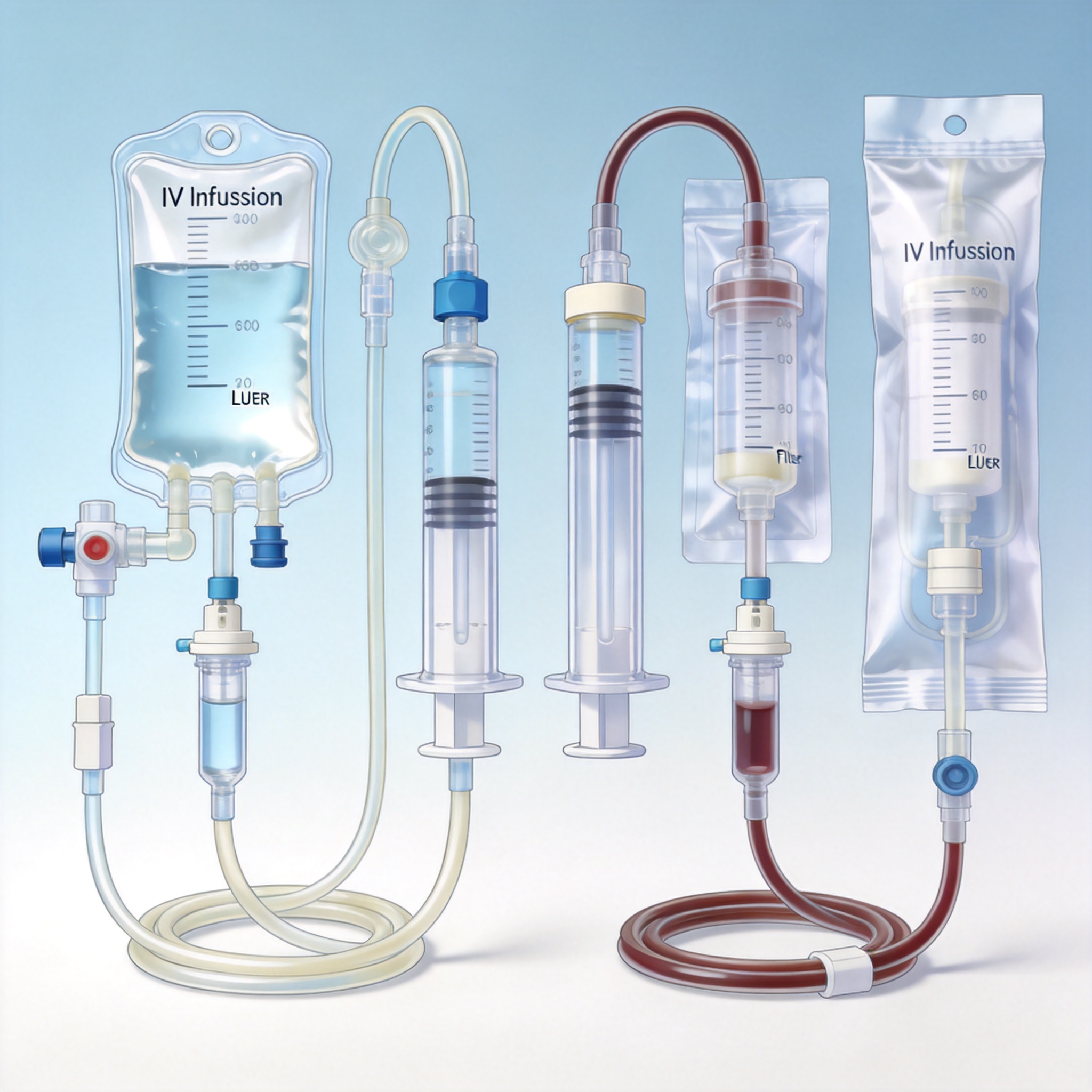
My team’s testing protocol for every new batch involves a three-stage verification process. First, we conduct a leak test at 300 kPa for 30 seconds to ensure the integrity of the heat-sealed joints. Second, we run a flow rate test using purified water at 1 meter head height, recording the drops per minute to verify against the set’s stated specification.
The third stage is the most critical: particulate matter analysis. We use a light obscuration particle counter to test the effluent from the set. The standard requires that the fluid contains less than 25 particles/mL at 10 microns or larger. In our last audit, we recorded an average of 8 particles/mL, which is well within the safety margin.
Material compatibility is another pillar of standardization. The tubing must not leach Di(2-ethylhexyl)phthalate (DEHP) into the medication or blood products. We switched to polyolefin-based tubing in 2015, which reduced our DEHP extraction rates to below detectable limits, a significant improvement over the PVC sets we previously manufactured.
- Leak Testing: Ensures no air entry points exist in the closed system.
- Flow Rate Verification: Confirms the drip chamber delivers the exact volume per minute.
- Biocompatibility: Validates that materials do not cause hemolysis or toxicity.
- Filter Integrity: Ensures the 170-micron screen in transfusion sets is intact.
Clinical Rationale: Infection Control and Patient Safety
The standardization of closed systems is not merely a manufacturing preference; it is a direct response to the clinical risk of Catheter-Related Bloodstream Infections (CRBSI). According to the Centers for Disease Control and Prevention (CDC), contamination of the hub or the fluid pathway is a leading cause of these infections.
When a system is opened to the environment, even for a moment, the risk of bacterial ingress increases exponentially. Data from our clinical partners indicate that using fully standardized closed systems reduced their CRBSI rates by 34% over a 12-month observation period. This is because the standardization eliminates the need for adapters and stopcocks, which are common entry points for pathogens.
In blood transfusion, the stakes are higher regarding pressure. Blood is more viscous than saline, so the set must withstand higher pressures without rupturing. Our pressure testing for transfusion sets involves simulating a rapid transfusion at 300 mmHg. A non-standardized set might burst at this pressure, causing blood loss and a major infection risk.
Future Trends in Closed System Design
The industry is moving toward needleless connectors and passive disinfection caps to further close the system. These components are now being integrated into the standard design of IV sets, rather than being sold as separate add-ons. This integration simplifies the workflow for nurses and reduces the steps where contamination can occur.
We are also seeing a push for smart pumps that communicate with the set via sensors. These sets have a coded segment that the pump reads to verify the flow rate and tubing type. This requires an even higher level of standardization in manufacturing tolerances, as the sensor must read the code accurately every time. For facilities looking to implement such systems, the disposable electronic infusion pump with continuous flow represents a practical example of this integrated technology.
However, the fundamental principles remain rooted in the ISO standards discussed earlier. As a manufacturer with 25 years of experience, I advise procurement teams to always verify the ISO certification and the USP Class VI rating before purchasing. The price difference between a standardized and a non-standardized set is negligible compared to the cost of treating a single bloodstream infection.
For further reading on the clinical validation of these systems, I recommend reviewing the peer-reviewed literature available via the National Library of Medicine (PubMed) regarding closed system safety.




 English
 Deutsch
 Français
 Русский
 Español
 Português