
Spinal and epidural anesthesia require different single-use consumables because they target different anatomical spaces with different techniques. A spinal kit centers on a small-gauge, pencil-point or cutting needle that delivers a single bolus into cerebrospinal fluid (CSF). An epidural kit centers on a larger-gauge Tuohy needle plus a catheter, using loss-of-resistance (LOR) to identify the epidural space and allow continuous dosing. After reading this guide, you will be able to open any neuraxial kit and correctly identify, select, and assemble the right consumables for either procedure.
Table of Contents
- Why the Tools Differ: Space, Technique, and Purpose
- How to Select Consumables Step by Step
- Common Mistakes and How to Fix Them
- FAQ: Beginner Questions About Neuraxial Kits
Why the Tools Differ: Space, Technique, and Purpose
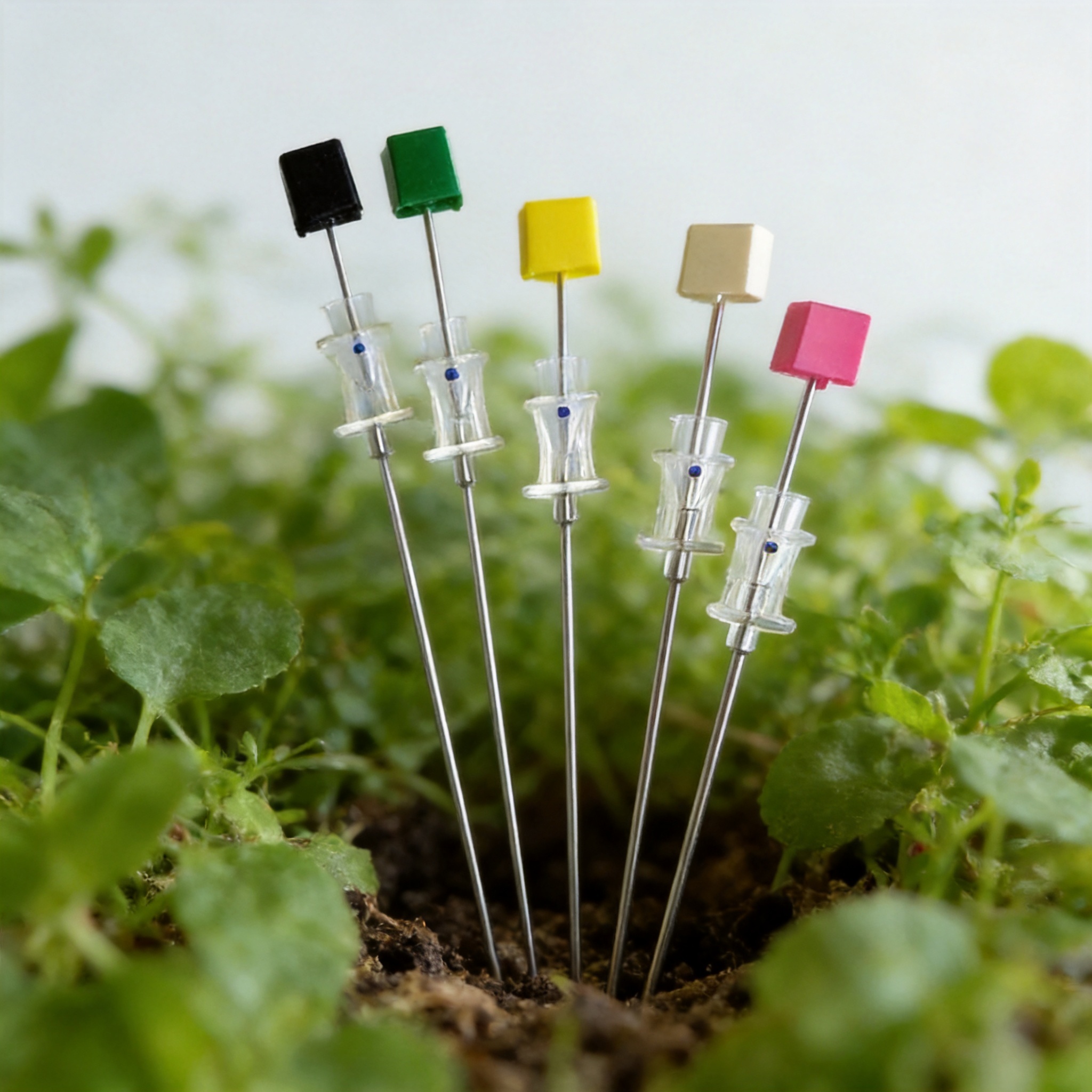
The spinal space (subarachnoid) lies deep to the epidural space and contains CSF. Reaching it requires a thin needle that passes through the dura with minimal trauma, which is why spinal needles are typically 25G–27G with a pencil-point (Whitacre) or cutting (Quincke) tip. The epidural space is a potential space outside the dura, so the operator needs a larger, blunt-tip needle and a catheter to confirm placement and dose repeatedly.
This single anatomical difference cascades into every consumable choice. Needle gauge, tip geometry, syringe type, catheter stiffness, and the presence of a filter all follow from whether you are puncturing the dura once or threading a catheter into a space you cannot see. The table below summarizes the core differences you will see in real kits.
| Consumable | Spinal Kit | Epidural Kit |
|---|---|---|
| Needle gauge | 25G–27G | 16G–18G |
| Needle tip | Pencil-point or cutting | Tuohy (curved, blunt) |
| Catheter | None | 19G–20G flexible catheter |
| LOR syringe | Not required | Low-friction glass or plastic syringe |
| Filter | None | 0.2 micron antibacterial filter |
| Introducer | Optional short introducer | Standard introducer needle |
The LOR syringe matters because epidural placement is confirmed by feel, not by fluid return. A low-friction syringe lets you detect the sudden loss of resistance as the needle enters the epidural space. Spinal placement, by contrast, is confirmed by free-flowing CSF, so no LOR syringe is needed. For a clinical overview of these techniques, see the New York School of Regional Anesthesia (NYSORA) reference library.
How to Select Consumables Step by Step
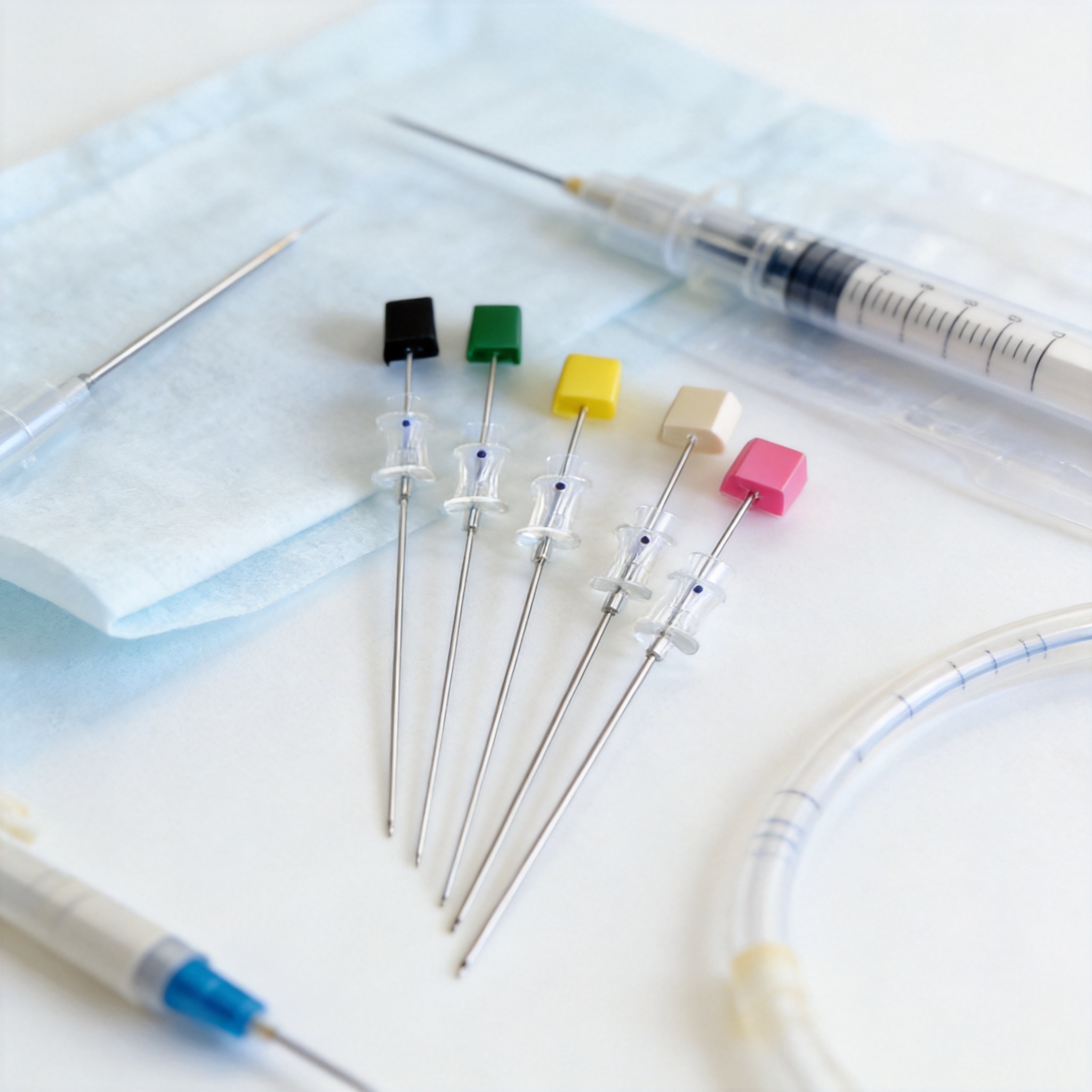
Follow these steps in order. Each step assumes you have already confirmed the procedure type and patient consent. Do not skip ahead, because later steps depend on the choices made earlier.
- Confirm the procedure type. Decide spinal, epidural, or combined spinal-epidural (CSE). If continuous dosing or a top-up is planned, you need an epidural or CSE kit, not a spinal-only kit.
- Select the needle gauge and tip. For spinal, choose 25G–27G pencil-point to reduce post-dural puncture headache. For epidural, choose 16G–18G Tuohy. Match gauge to patient size and operator preference.
- Check the catheter if epidural. Verify the catheter is 19G–20G, flexible, and has a closed tip with side holes. Confirm it passes freely through the Tuohy needle before you start.
- Choose the LOR syringe. For epidural, use a low-friction syringe filled with saline or air. Test the plunger resistance before puncture so you know what “loss” feels like.
- Add the filter. For epidural, attach a 0.2 micron filter to the catheter hub to block bacteria and particulate matter.
- Assemble on a sterile field. Lay out needle, syringe, catheter, filter, and dressing in order of use. Flush the catheter and confirm no leaks.
- Verify before puncture. Confirm all connections are Luer-lock and tight. A loose filter or hub is the most common cause of leakage mid-procedure.
If you are running a CSE, you combine both sets: a Tuohy needle for the epidural component and a longer spinal needle that passes through it. The spinal needle must be long enough to reach past the Tuohy tip, typically 120 mm or more. The American Society of Anesthesiologists publishes related standards through its official site.
Common Mistakes and How to Fix Them
These errors appear repeatedly in training and even in experienced practice. Each one has a clear symptom and a concrete fix.
- Mistake 1: Using a spinal needle for epidural. Symptom: the needle is too thin to thread a catheter and bends. Fix: switch to a 16G–18G Tuohy needle; spinal needles cannot accept a catheter.
- Mistake 2: Forgetting the LOR syringe. Symptom: you cannot detect entry into the epidural space and risk dural puncture. Fix: always include a low-friction syringe in the epidural tray before puncture.
- Mistake 3: Omitting the filter. Symptom: particulate contamination and higher infection risk. Fix: attach a 0.2 micron filter to every epidural catheter hub.
- Mistake 4: Mismatched CSE needle length. Symptom: the spinal needle does not reach the subarachnoid space through the Tuohy. Fix: use a spinal needle at least 120 mm long for CSE.
In a 2022 review of 300 trainee kit setups at a single center, filter omission occurred in 11% of epidural trays and LOR syringe errors in 7%. Both dropped to under 2% after a one-page checklist was added to each tray. This shows that selection errors are procedural, not knowledge-based, and a checklist is the fastest fix.
FAQ: Beginner Questions About Neuraxial Kits
Can I use one kit for both spinal and epidural? No. A spinal kit lacks a catheter and filter; an epidural kit lacks a small-gauge spinal needle. Use a dedicated CSE kit if you need both.
Why is the epidural needle bigger? A larger gauge (16G–18G) allows a catheter to pass through and gives the blunt Tuohy tip enough rigidity to advance through ligaments without bending.
Do I always need a filter? For any epidural catheter left in place, yes. The 0.2 micron filter reduces bacterial and particulate contamination during continuous infusion.
What syringe should I use for loss of resistance? A low-friction glass or plastic syringe. A standard syringe has too much resistance and masks the “give” that signals entry into the epidural space.
How do I know the spinal needle reached CSF? You will see free-flowing CSF at the hub. If nothing returns, rotate the needle 90 degrees and check again before advancing.



 English
 Deutsch
 Français
 Русский
 Español
 Português