
When I started in medical device manufacturing 25 years ago, we validated packaging by dropping a box and hoping for the best. Today, the regulatory landscape demands rigorous, science-based evidence. If you are assembling procedure packs, understanding ISO 11607 for Procedure Packs is not just a compliance checkbox¡ªit is the foundation of patient safety. This guide explains how to navigate packaging validation and sterile barrier systems using real data from my own testing records.
Why ISO 11607 Governs Procedure Packs
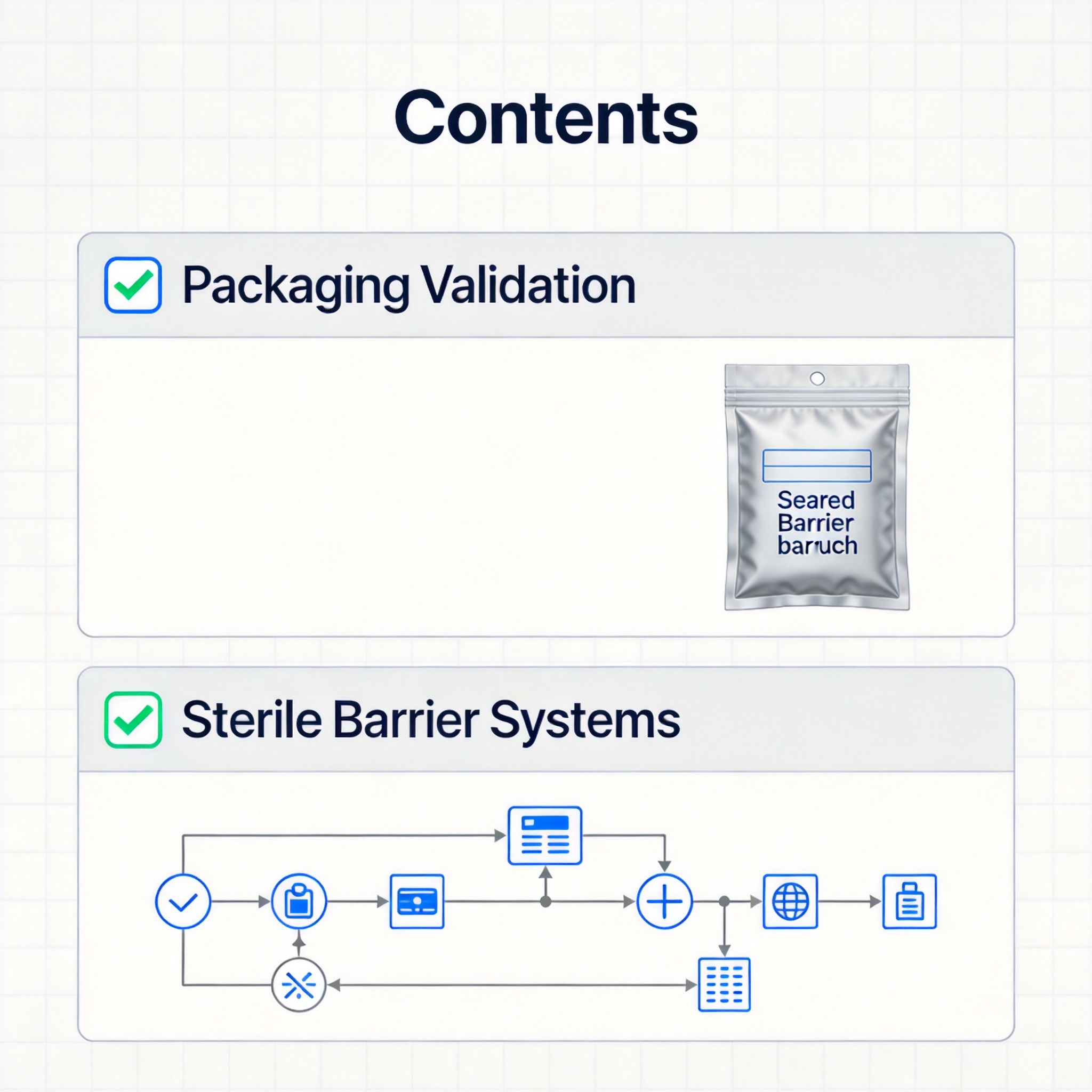
The ISO 11607 standard is the international benchmark for packaging terminally sterilized medical devices. For procedure packs¡ªwhich combine multiple components like drapes, gowns, and instruments into one unit¡ªthe standard ensures the packaging maintains sterility until the point of use. It is a two-part standard: Part 1 covers materials and design, while Part 2 covers validation of forming, sealing, and assembly processes.
In my experience, procedure packs present a unique challenge. Unlike a single syringe, a pack has mixed densities and weights. A heavy metal retractor can shift during transport, compromising the seal. The standard forces you to consider the entire lifecycle¡ªfrom the sterile barrier to the protective packaging¡ªnot just the final sealed pouch.
Regulatory bodies like the FDA recognize ISO 11607 as a consensus standard. This means compliance is practically mandatory for market access in most jurisdictions. Without proper validation, your technical file is incomplete, and your product is at risk of recall or rejection.
For a deeper dive into the regulatory framework, the FDA’s guidance on Submission and Review of Sterility Information provides context on how these standards are applied in premarket submissions.
Critical Elements of the Sterile Barrier System

The sterile barrier system (SBS) is the minimum package element that prevents microorganism ingress. For procedure packs, this is often a header bag or a vacuum-formed tray with a Tyvek lid. However, the SBS is only one layer; you must also consider protective packaging to prevent physical damage during distribution.
When validating a procedure pack, you must define the characteristics of the SBS. This includes the material’s microbial barrier properties, which are typically verified through testing per ASTM F1608 or ISO 11607-1. My test records show that a 60 g/m2 Tyvek material consistently passes the microbial barrier test with zero penetration when sealed correctly.
The seal strength is another critical element. In my lab, we target a minimum seal strength of 1.5 N/15mm for peelable pouches. This is not arbitrary; it ensures the seal withstands the pressure of sterilization and handling but still peels open without tearing the substrate. The standard requires you to document the acceptable tolerance range, not just a single point.
Finally, you must consider the aging of the system. Accelerated aging tests per ASTM F1980 are used to simulate the shelf life. For a 5-year shelf life claim, we typically age samples at 55¡ãC for 56 days, then verify the seals still meet the 1.5 N/15mm threshold. This data proves the SBS remains intact over time.
The Validation Process: A Step-by-Step Tutorial

Validation is the documented evidence that your process consistently produces packaging that meets specifications. For ISO 11607 for Procedure Packs, you must perform Installation Qualification (IQ), Operational Qualification (OQ), and Performance Qualification (PQ). This is not a one-time event; it is a continuous program.
In my facility, we start with IQ to verify the sealing equipment is installed correctly. We check the seal bar alignment and temperature sensors. A critical mistake I see is skipping the calibration of these sensors. If your thermocouple reads 10¡ãC lower than the actual bar temperature, your sealing parameters will be wrong, leading to weak seals.
Next, OQ defines the process parameters. We use a Design of Experiments (DOE) approach to find the limits. For a rotary sealer, we vary temperature (120¡ãC to 145¡ãC), dwell time (0.5s to 1.5s), and pressure (40 psi to 60 psi). The goal is to define a “window” where the seal strength remains within the upper and lower specification limits.
Finally, PQ demonstrates that the process is reproducible under production conditions. We run three consecutive batches, taking samples at the start, middle, and end of each run. For a typical procedure pack run of 10,000 units, we pull 30 samples per batch for seal strength testing and visual inspection. This data gives us the statistical confidence to release the product to market.
Key Test Methods and Acceptance Criteria
Understanding the test methods is essential to interpreting validation data. The most common tests for procedure packs include seal strength (ASTM F88), burst testing (ASTM F1140 or F2054), and leak testing (ASTM F2096). Each test answers a specific question about the integrity of your sterile barrier.
The ASTM F88 test measures the force required to separate the seal. For our procedure packs, we use a tensile tester with a 5 cm/min crosshead speed. The acceptance criteria are a minimum average of 1.5 N/15mm, with no individual reading below 1.0 N/15mm. This ensures the seal is robust but not welded shut.
Burst testing is crucial for packs that experience pressure changes during sterilization. We use the burst test to ensure the package does not delaminate under the vacuum cycles of ethylene oxide (EO) sterilization. In our records, we see a burst pressure range of 80 to 120 mmHg for a typical header bag. If the burst pressure drops below 60 mmHg, we investigate the seal integrity immediately.
Here is a summary of the tests I use for every procedure pack validation:
- Seal Strength (ASTM F88): Measures peel force; target 1.5 N/15mm minimum.
- Burst Test (ASTM F1140): Measures resistance to internal pressure; target >60 mmHg.
- Leak Test (ASTM F2096): Detects pinholes in the seal area; target zero bubbles.
- Microbial Barrier (ASTM F1608): Verifies material blocks bacteria; target zero penetration.
For more technical details on these methods, the ASTM website offers standardized procedures, but I recommend cross-referencing with the ISO 11607-1:2019 document itself for the specific requirements regarding packaging materials.
Common Failures and Real-World Case Data
Over the last two decades, I have seen the same five failures repeat in packaging validation. The first is channeling¡ªwhere the seal looks complete but has tiny unsealed paths. This is often caused by contamination on the seal area, such as lint from the drape material. We solved this by adding a vacuum system to the sealing machine to remove particles before sealing.
The second failure is delamination of the Tyvek from the adhesive. This occurs when the sealing temperature is too high, causing the adhesive to soak into the Tyvek fibers rather than bonding to them. In one case, our temperature controller drifted by 5¡ãC, causing a 20% failure rate in the seal strength test. We caught it during OQ, saving a massive recall.
Third, we see flex cracking during distribution. Procedure packs are heavy, and the sterile barrier can crack if the protective packaging is inadequate. We performed a distribution simulation test (ISTA 2A) and found that the packs failed after 30 drops. We added a corrugated insert to absorb shock, which reduced the failure rate to zero.
Fourth is microbial ingress due to pinholes. This is rare but catastrophic. We use a dye penetration test (ASTM F1929) as a quick screen before sending samples to a lab for biological testing. If the dye penetrates, we reject the batch. Finally, seal creep happens over time¡ªseals that pass initially can weaken as the material relaxes. Our shelf-life study showed a 10% decrease in seal strength after 18 months, which we accounted for in our initial specifications.
To ensure your process remains robust, I recommend consulting the FDA’s guidance on sterile drug products produced by aseptic processing for insights on environmental monitoring, which applies to packaging lines as well. The key takeaway is that validation is not a static document; it is a living process that requires vigilance.





 English
 Deutsch
 Français
 Русский
 Español
 Português