
Aesthetic injection is the one field where a sharp needle is not automatically the better choice. When filler or a resorbable implant has to be placed along a plane — under the cheek, down the nasolabial fold, along a jawline — a blunt-tip cannula lets the practitioner move through tissue with far less risk of entering an artery, and distributes the product more evenly than a needle track does. That changed the consumable list for every aesthetic clinic: the question is no longer only which dermal filler, but which entry point, which cannula gauge and which length reaches the plane safely.
This category covers the injection consumables used in medical aesthetics: blunt-tip cannulas and microcannulas in the common gauges, flexible and rigid options, Luer-lock hubs, and the sharp needles used for entry and for products that must be injected precisely. Sizes run from 18G to 30G with lengths matched to facial and body planes, in individual sterile pouches or in procedure sets. Every item is single-use, EO sterilized and supplied with the documentation an aesthetic distributor or clinic chain needs.
Aesthetic buyers ask a narrower set of questions than hospital procurement: does the hub fit the syringes we already use, does the cannula reach the plane at this depth, and is the tip smooth enough that it does not drag or coring on entry. Those three are what this category is engineered around.
Trying to match a cannula to a filler your clinic already stocks? Tell us the product viscosity, the treatment area and the syringe you use. We will recommend the gauge, length and tip geometry that reaches the plane without over-thinning the product — and send samples for your injectors to test.


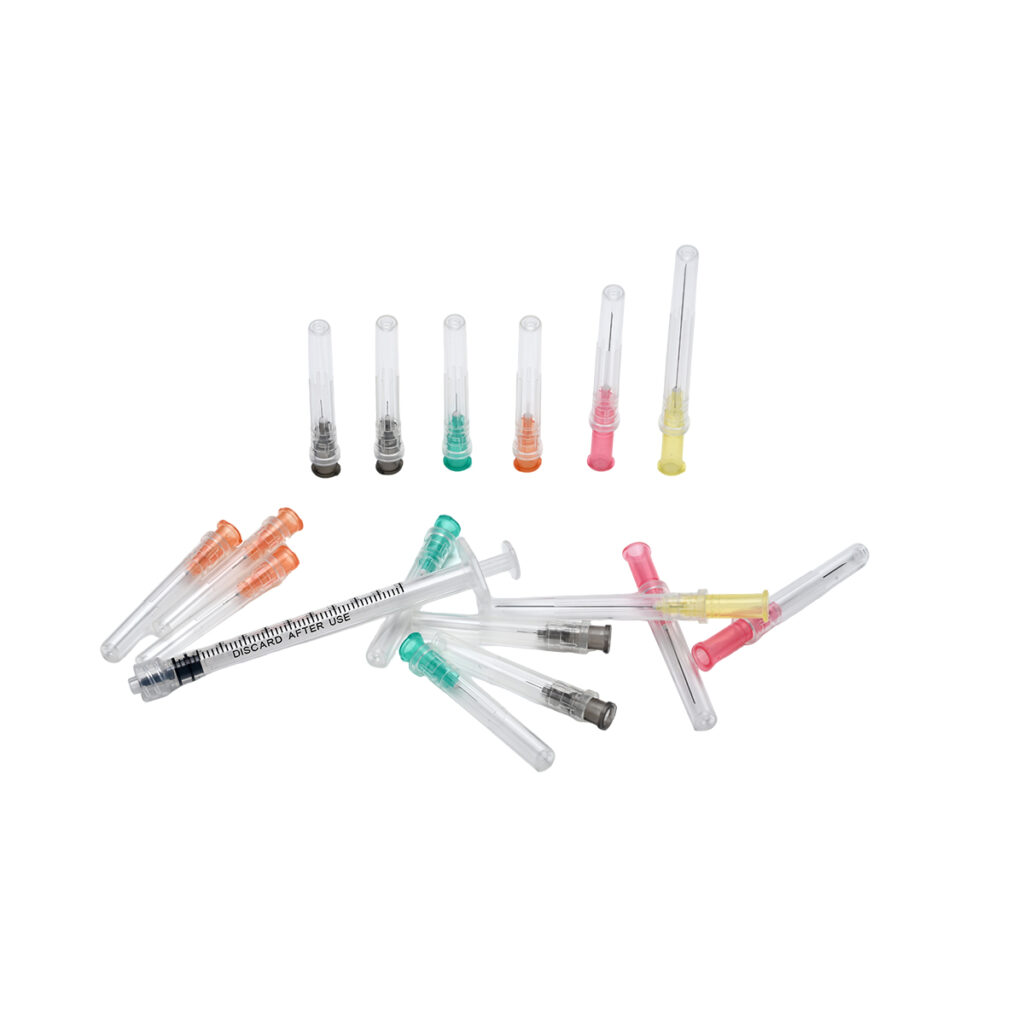
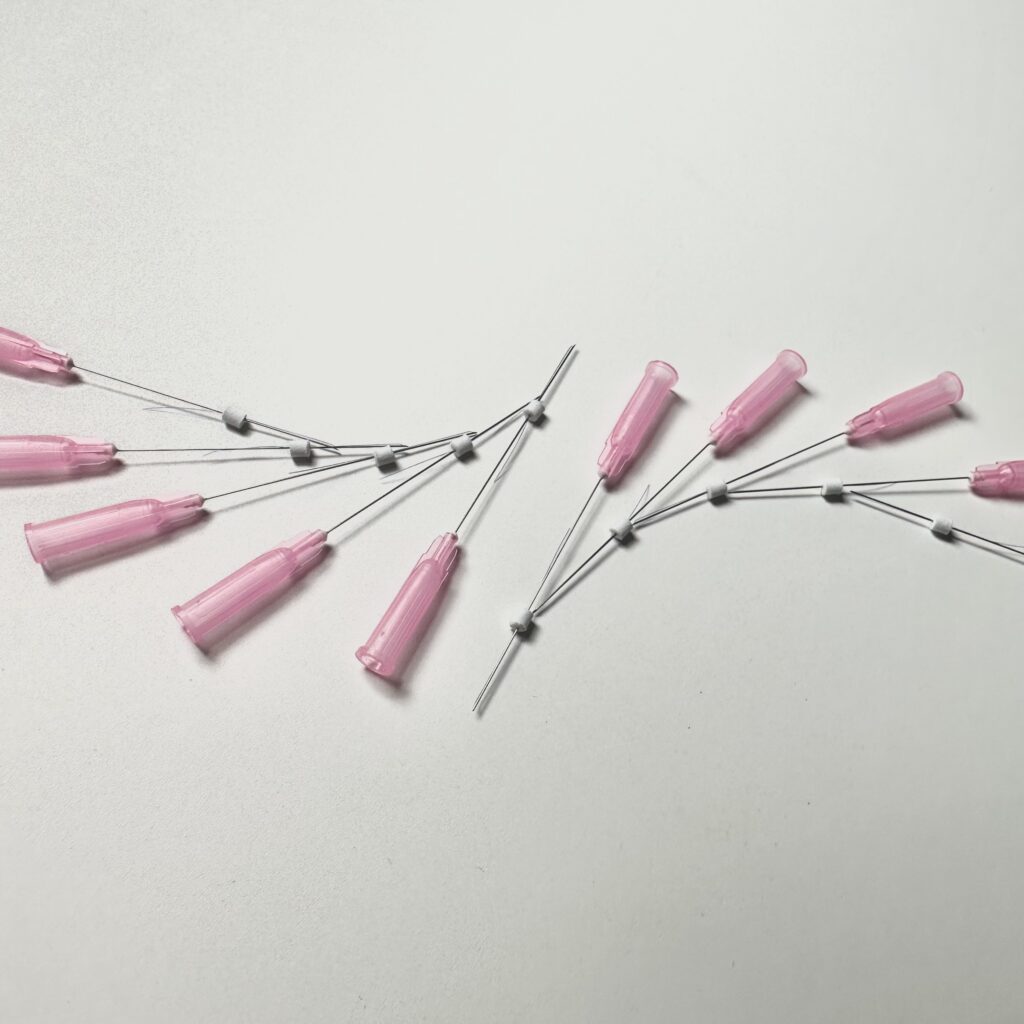
Three variables decide the cannula, and they interact:
| Type | Gauge | Length | Typical use |
|---|---|---|---|
| Blunt-tip cannula, flexible | 25G–27G | 25 / 38 / 50 mm | Perioral, tear trough, superficial dermal |
| Blunt-tip cannula, rigid | 18G–22G | 50 / 70 / 90 mm | Cheek, jawline, high-viscosity filler |
| Microcannula, fine | 27G–30G | 25 / 38 mm | Thin tissue, skin boosters, mesotherapy |
| Entry needle | One to two gauges larger | Matched to cannula | Entry puncture before cannula insertion |
| Sharp injection needle | 27G–32G | 13 / 25 / 38 mm | Precise bolus, botulinum, skin booster |
| Procedure set | Mixed | Configurable | Single sterile pack for one treatment |
Note: gauge and length ranges shown are the configurations we produce most; the correct pairing for a specific product is confirmed against its viscosity and the treatment plane.
Aesthetic consumables carry a different risk profile from general medical devices, and buyers vet them accordingly:
Tear trough work usually calls for a 25G–27G flexible microcannula at 25–38 mm, introduced through a single entry point and advanced in the supraperiosteal or deep subcutaneous plane. The tissue here is thin and mobile, so a smaller, more flexible cannula follows the plane with less trauma — but the product must be low enough in viscosity to pass a fine lumen without excessive force. Tell us the filler you use and we will confirm whether 25G or 27G is the better match.
They reduce the risk of inadvertent intravascular injection, which is one of the main mechanisms behind filler-related vascular complications. A blunt tip is less likely to enter and cannulate an artery than a sharp needle tip, and the single entry point means fewer passes through the tissue. This is a risk reduction, not an elimination — product still should not be injected against high resistance, and the practitioner's knowledge of vascular anatomy remains the primary safeguard.
We supply Luer-lock and Luer-slip hubs, with Luer-lock as the standard for filler work because it resists the pressure of extruding high-viscosity product. Compatibility with the common 1 ml, 2 ml and 3 ml syringes used in aesthetics is verified; if your clinic has standardized on a specific syringe brand, tell us and we will confirm the fit and send a sample before you order a case.
Rigid cannulas in 18G–22G at 50–90 mm hold direction well and are the usual choice for deep, high-viscosity placement along the cheek and jawline through a single temporal or buccal entry. Flexible cannulas suit planes that curve or change depth. Many practices stock both: rigid for volumizing, flexible for linear filling and superficial work.
Ethylene oxide sterilization to SAL 10⁻⁶, individually pouched with lot number and expiry date printed on the pouch. Store in a dry, ventilated area at ambient temperature away from direct sunlight and keep the pouch sealed until use; do not resterilize. Shelf life is stated on the label and supported by our packaging and stability validation.
Yes. We manufacture with your brand, artwork, part numbers and IFU, including the label content your market requires. Aesthetic private label usually ships in lower quantities than hospital OEM, so minimum order quantities are set per item and configuration — send us the item list and target volume and we will confirm the MOQ for each line.
Related categories:
Disposable Blunt End Injection Needle ·
Anesthesia Consumables ·
Nursing Consumables
OEM & manufacturing:
OEM Blunt Cannula Manufacturing ·
Factory Audit & Visit ·
Low MOQ OEM
Regulatory guides for your market:
EU MDR Import Requirements ·
UAE MOHAP Registration ·
Saudi Arabia SFDA Registration
Who we supply:
Aesthetics Clinics ·
Become a Distributor
Technical reading:
Blunt Cannula Injection Techniques ·
Needle Tip Geometry and Point Angles ·
ISO 7864 Needle Requirements
Not sure which blunt cannula fits the product you inject?
Tell us the filler or product name, the treatment area and the syringe your clinic uses. We will confirm the gauge, length and tip geometry that fits — and send samples so your injectors can judge the feel before you order.
Sample requests are answered with a gauge and length recommendation for your product.
 English English
 Deutsch
 Français
 Русский
 Español
 Português